
Spend any time looking at high-end kitchens and one stone keeps reappearing: Taj Mahal quartzite. Designers specify it again and again, in projects that otherwise share almost nothing in common, and that is not an accident. Taj Mahal delivers the soft, luminous look of marble with the toughness of something far more practical, which is a rare combination.
This is a closer look at why it earns that loyalty, including an honest note on the material science that most listings skip, so you can decide whether Taj Mahal quartzite countertops belong in your project.
What Taj Mahal Quartzite Is
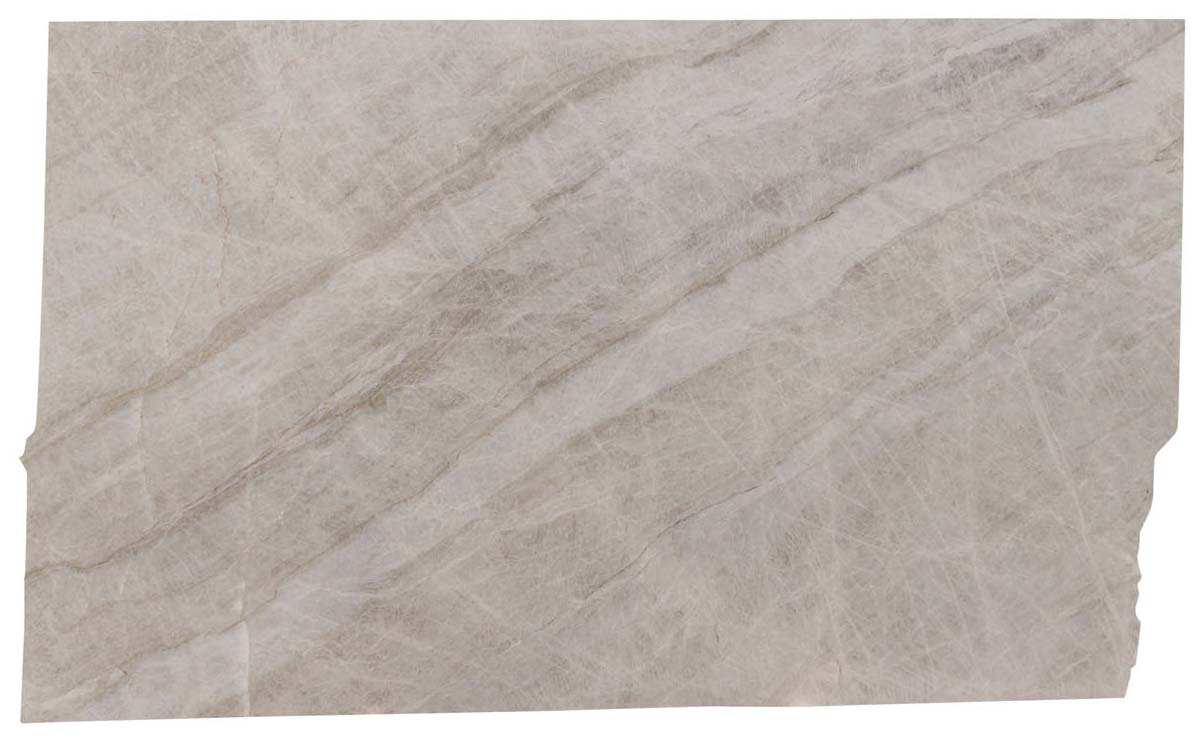
Taj Mahal is a natural stone quarried primarily in Brazil. Like all true quartzite, it began as quartz-rich sandstone that was buried and subjected to extreme heat and pressure over geologic time, fusing the grains into a dense, hard stone. What sets Taj Mahal apart is its coloring: a soft, warm background that runs from ivory to gentle beige, brushed with feathery veins of gold, taupe, and gray. The effect is calm and organic rather than busy, which is exactly why it reads as elevated without shouting.
Why Designers Keep Specifying It
The short answer is that Taj Mahal looks like marble and behaves like granite. Its soft, low-drama movement makes it a favorite alternative to Calacatta marble for people who love that serene, veined look but do not want marble's fragility.
Where marble is soft and reactive, Taj Mahal is harder, more heat tolerant, and far more resistant to the etching and staining that make marble owners nervous. For a designer, that means delivering the timeless look a client asks for without the maintenance conversation that usually follows. It also happens to be the warm one. Among white quartzite countertops, Taj Mahal reads welcoming rather than cool and stark, and that warmth is a big part of its appeal.
A Note on What 'Quartzite' Really Means
Here is the part most articles leave out, and it is worth knowing before you buy. The word quartzite gets used loosely in the stone trade, and not every slab sold as Taj Mahal tests as true, quartz-based quartzite. Some lots run closer to a dense dolomitic marble, which looks nearly identical but is softer and more acid-sensitive. As the Natural Stone Institute explains, quartzite is one of the most commonly mislabeled stones on the market.
The good news is that you can check. True quartzite is hard enough that a shard of glass will not scratch it, so a quick scratch test at the stone yard tells you a lot. An overnight test with a little vinegar on an inconspicuous corner tells you the rest: true quartzite will not etch, while a dolomitic marble will dull where the acid sat. Neither result is bad. The two stones simply call for different care. Either way, you deserve to know which one is going home.
How It Performs
True Taj Mahal quartzite rates around 7 on the Mohs hardness scale, on par with quartzite generally and above most granite. In a kitchen, that translates to real durability. It resists scratches from knives and cookware, takes a hot pan off the burner without scorching, and holds up to daily use far better than marble. It is not maintenance-free, though. Like any natural stone, it benefits from sealing about once a year to keep its stain resistance at its best. That is the whole care routine, and it is an easy one.
A Neutral That Works With Everything
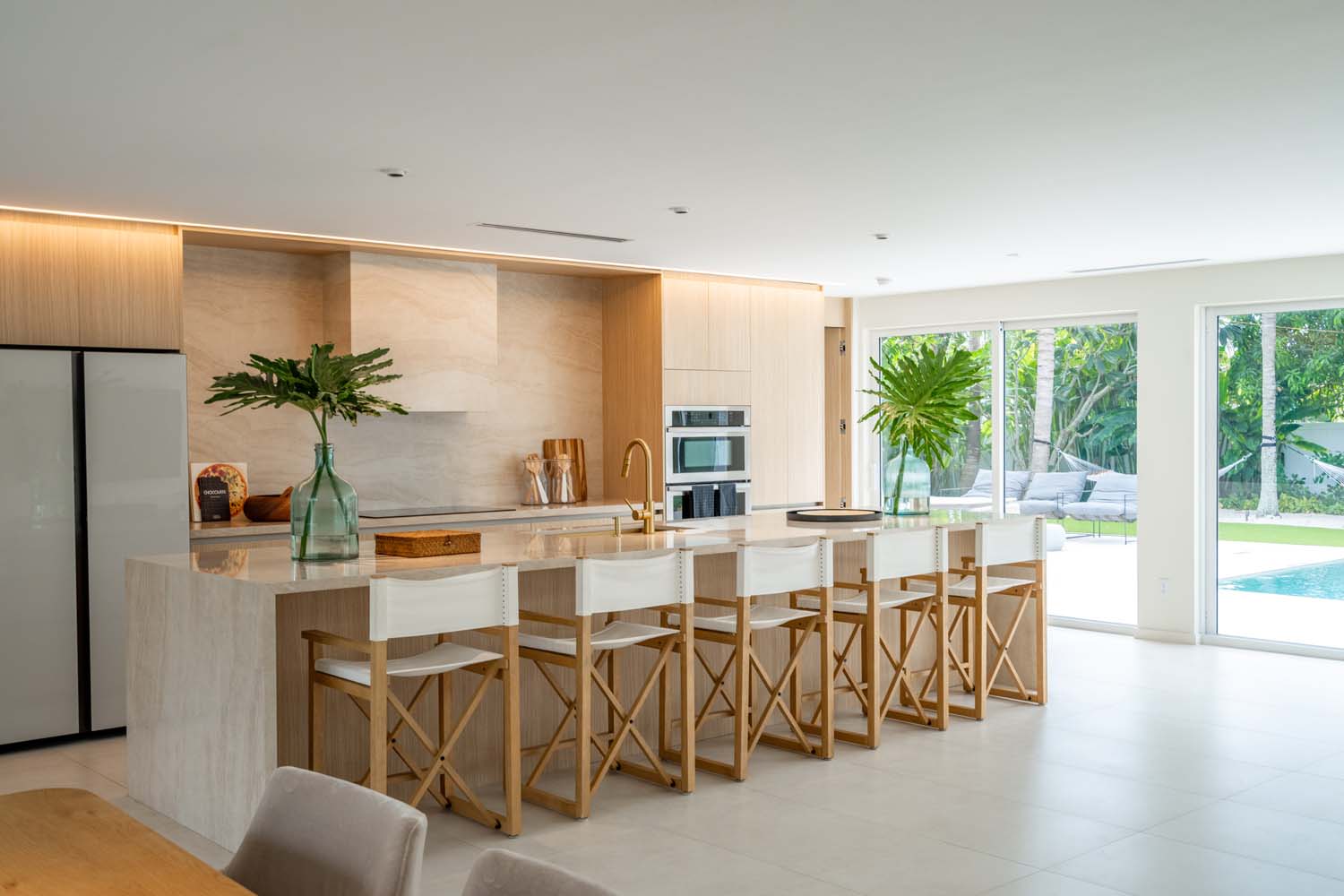
Part of Taj Mahal's staying power is how agreeable it is. The warm neutral palette flatters almost any cabinetry. It brightens crisp white shaker kitchens, warms natural wood tones, and softens dark or moody cabinetry without fighting it. That flexibility is a big reason it turns up across so many different styles, from coastal to transitional to modern. It is the rare stone that does not lock you into a single look.
Beyond the Countertop
Taj Mahal rarely stays confined to the countertop, because its veining is too good to stop at the edge. It is a natural for waterfall island edges, where the pattern pours over the side. It also makes a stunning full-height backsplash, carrying the same slab from the counter up the wall for a seamless effect. And it shines on bathroom vanities and fireplace surrounds, anywhere a warm, continuous run of stone can become the focal point.
Polished, Honed, or Leathered
Finish changes Taj Mahal's whole personality. A polished finish is brighter and more reflective, deepening the veining and giving the stone a classic, luminous look. A honed finish is matte and understated, softer and more contemporary.
And leathered Taj Mahal quartzite has become a designer favorite for good reason. The subtle, textured surface reads modern and organic. On top of that, Taj Mahal leathered quartzite hides fingerprints and minor wear better than a polished top, which makes it especially forgiving in a busy kitchen. There is no wrong choice here, only the mood you are after.
No Two Slabs Are Alike
Because it is natural, Taj Mahal varies dramatically from slab to slab. One block can be nearly veinless and creamy, quiet enough to disappear into a calm scheme, while the next is full of dramatic amber and taupe movement that demands to be the star. That range is a feature, not a flaw, but it does mean a photo online tells you almost nothing about the slab you will actually receive. This is a stone to choose in person, matching the specific piece to the room it is going into.
Trusted for a Celebrity Renovation
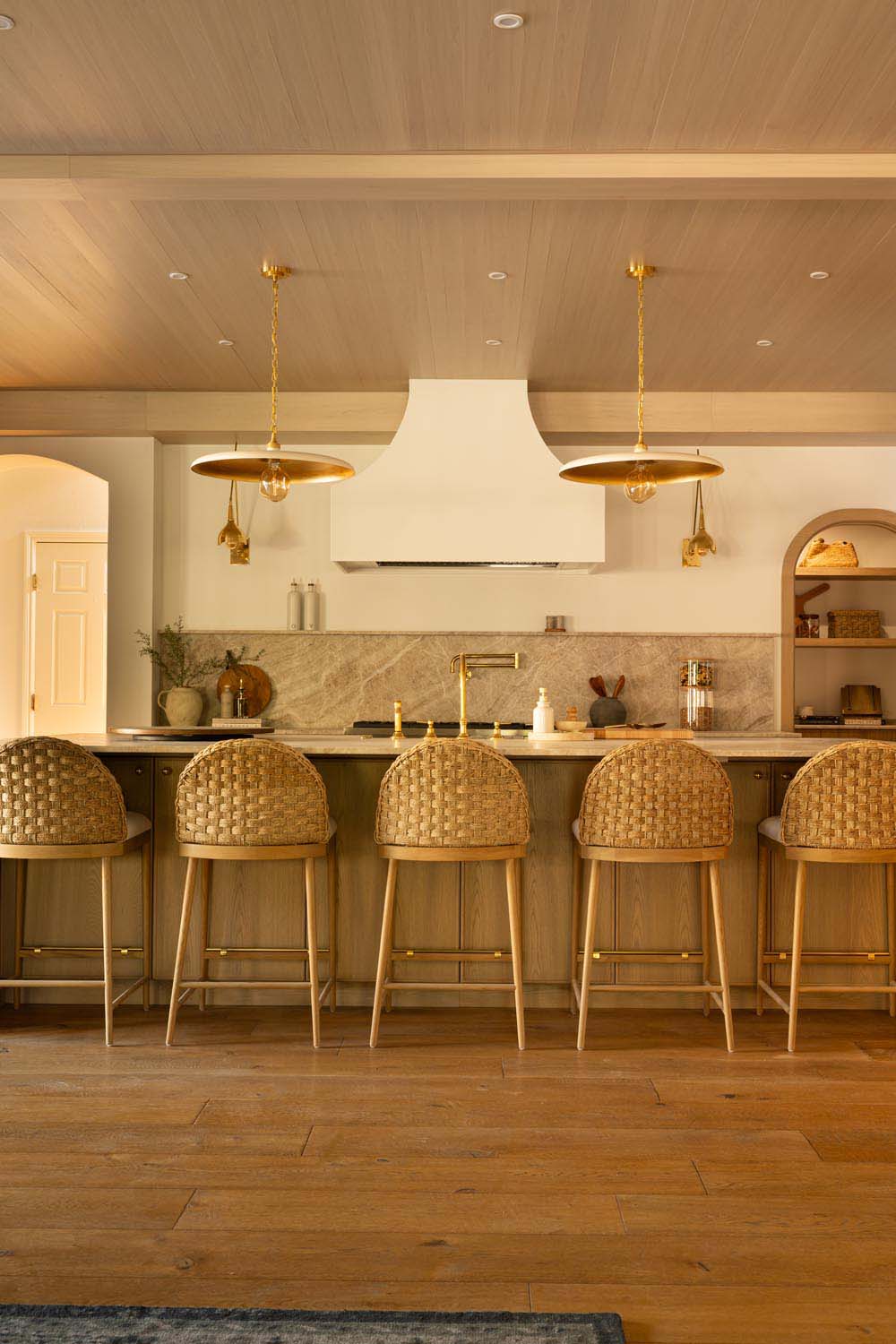
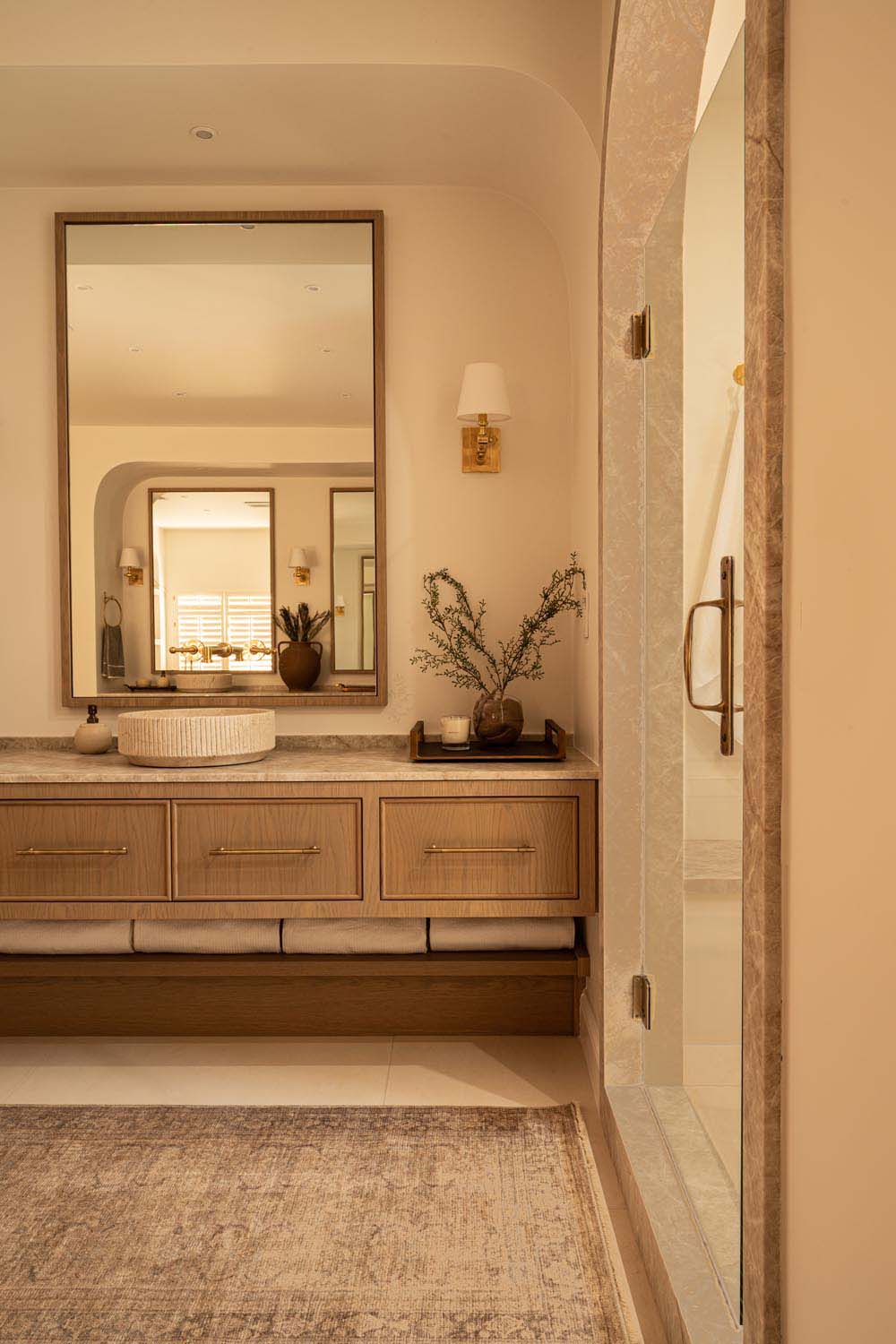
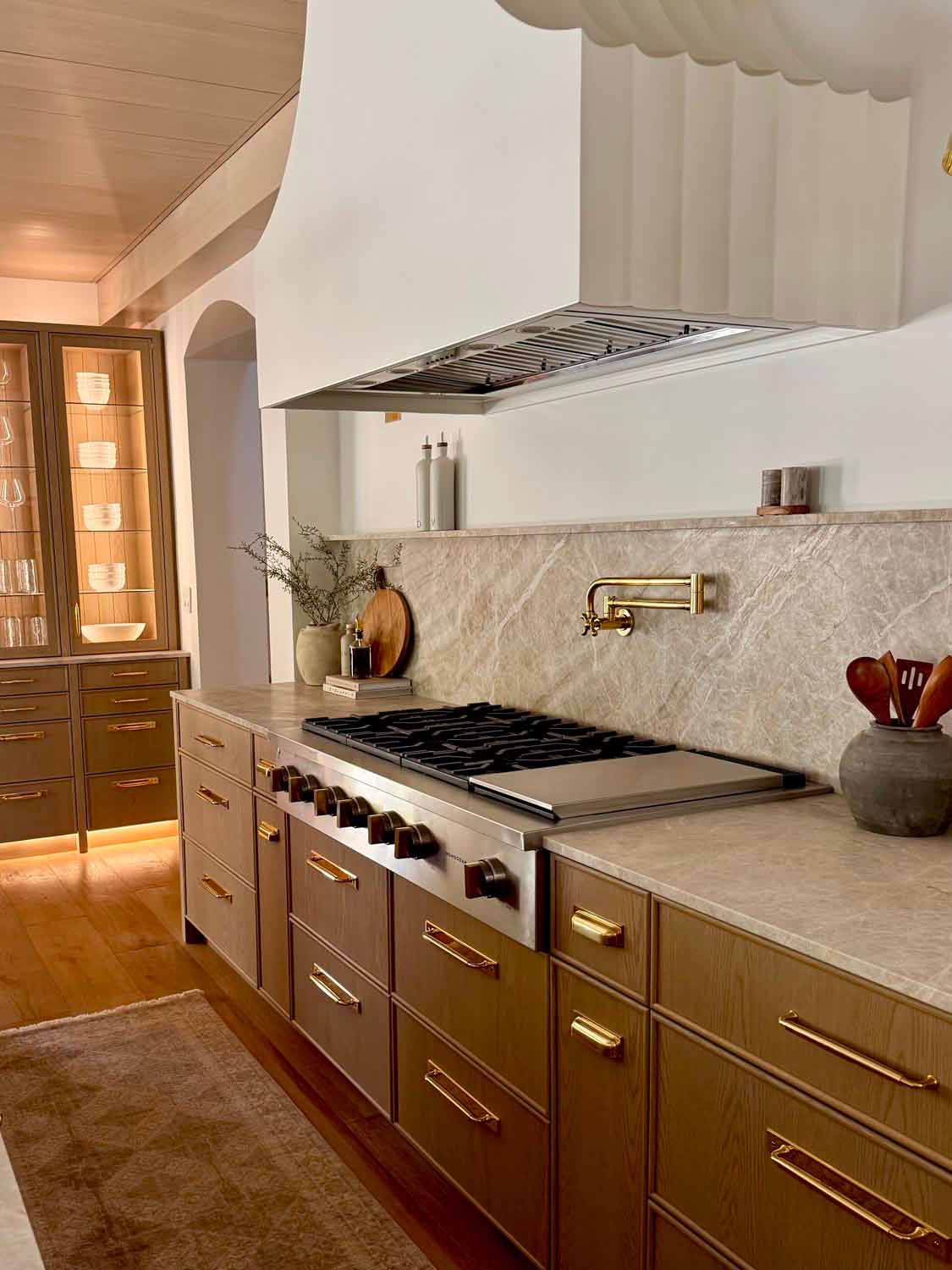
If you want a sense of the company Taj Mahal keeps, consider a recent project. Designer Galey Alix recently surprised NFL star Kyle Juszczyk and fashion designer Kristin Juszczyk with a full home makeover. To carry the vision, from a seamless kitchen to a serene primary bath, she chose Opustone's Taj Mahal Leather Quartzite. The result was striking enough to be featured in People magazine. You can see the finished residence in our project gallery.
It Comes Down to the Slab
Taj Mahal earns its reputation, but the version that ends up in your kitchen depends entirely on the slab you choose and, just as importantly, on confirming you are getting true quartzite. Both of those happen best in person.
Visit an Opustone showroom in Miami, Fort Lauderdale, or West Palm Beach to see full Taj Mahal slabs, compare polished against leathered, and select the exact piece for your project.
Explore Taj Mahal in our collection or book an appointment, and our team will help you find the slab worth specifying.
Frequently Asked Questions
For durability, generally yes. Taj Mahal offers a similar soft, veined look to marble but is harder, more heat tolerant, and far more resistant to etching and staining. It still benefits from annual sealing, but it holds up to daily kitchen use much better than marble does.
Not necessarily. Because the term quartzite is used loosely in the trade, some slabs sold as Taj Mahal test closer to a dense dolomitic marble. A quick scratch test (glass should not scratch true quartzite) and an overnight vinegar test (true quartzite will not etch) confirm what you are actually buying.
Yes, about once a year. Sealing keeps its natural stain resistance at its best. It is a quick job and the main upkeep the stone asks for.
It has a soft, warm background from ivory to beige, with feathery veins of gold, taupe, and gray. Because it is natural, individual slabs range from nearly veinless and creamy to dramatically veined with amber movement.
Very. True Taj Mahal rates around 7 on the Mohs scale, resists scratches, tolerates hot pans, and stands up to everyday use, all while delivering a warm, marble-like look. With yearly sealing, it is an excellent kitchen surface.
It depends on the look you want. Polished is brighter and more reflective and deepens the veining, while leathered Taj Mahal quartzite is softer and more contemporary and hides fingerprints and minor wear better, which makes it popular for busy kitchens.
It is best described as a warm white or ivory quartzite. Among white quartzite countertops, Taj Mahal is the warm, welcoming option rather than a cool, stark white, which is part of why it pairs so easily with wood and warmer palettes.