
No stone gets requested more often than marble, and none is more misunderstood. People fall for the veining, for the way a single slab can anchor an entire room, and sign off before anyone explains what living with marble actually asks of them. Marble is worth every bit of its reputation. It is also a natural stone with real quirks, and the happiest marble owners are the ones who knew them going in.
This guide gives you the whole picture: what marble is, why it behaves the way it does, the honest case for and against it, how to care for it, and how to choose a slab that will still stop people in their tracks a decade from now.
What Makes Marble, Marble
Marble starts as limestone. Buried deep and subjected to enormous heat and pressure over millions of years, the limestone recrystallizes into the denser stone we call marble, though denser is relative.
Marble is essentially calcite, or calcium carbonate, and calcite is both soft and chemically reactive. That single fact explains almost everything about the stone, the good and the bad. Its soft, crystalline structure is what lets light sink slightly into the surface and gives marble its unmistakable depth and glow. It is also why marble can scratch, etch, and stain more readily than granite or quartzite. The beauty and the vulnerability are the same trait.
Why People Love Marble
The pull is mostly the veining. No two slabs are alike, and the best of them read like abstract paintings, veins of gold, grey, green, or wine drifting across a pale field. It is a look no engineered surface has quite matched, because it was not designed, it was formed.
There are practical reasons to love it too. Marble stays naturally cool, which is why serious bakers have rolled dough on it for generations. It tolerates heat well, so it will not scorch under a hot pan the way some surfaces do. And it carries a timeless quality that pays off at resale, since well-kept marble kitchen countertops and marble bathroom countertops still signal quality in a way passing trends never do.
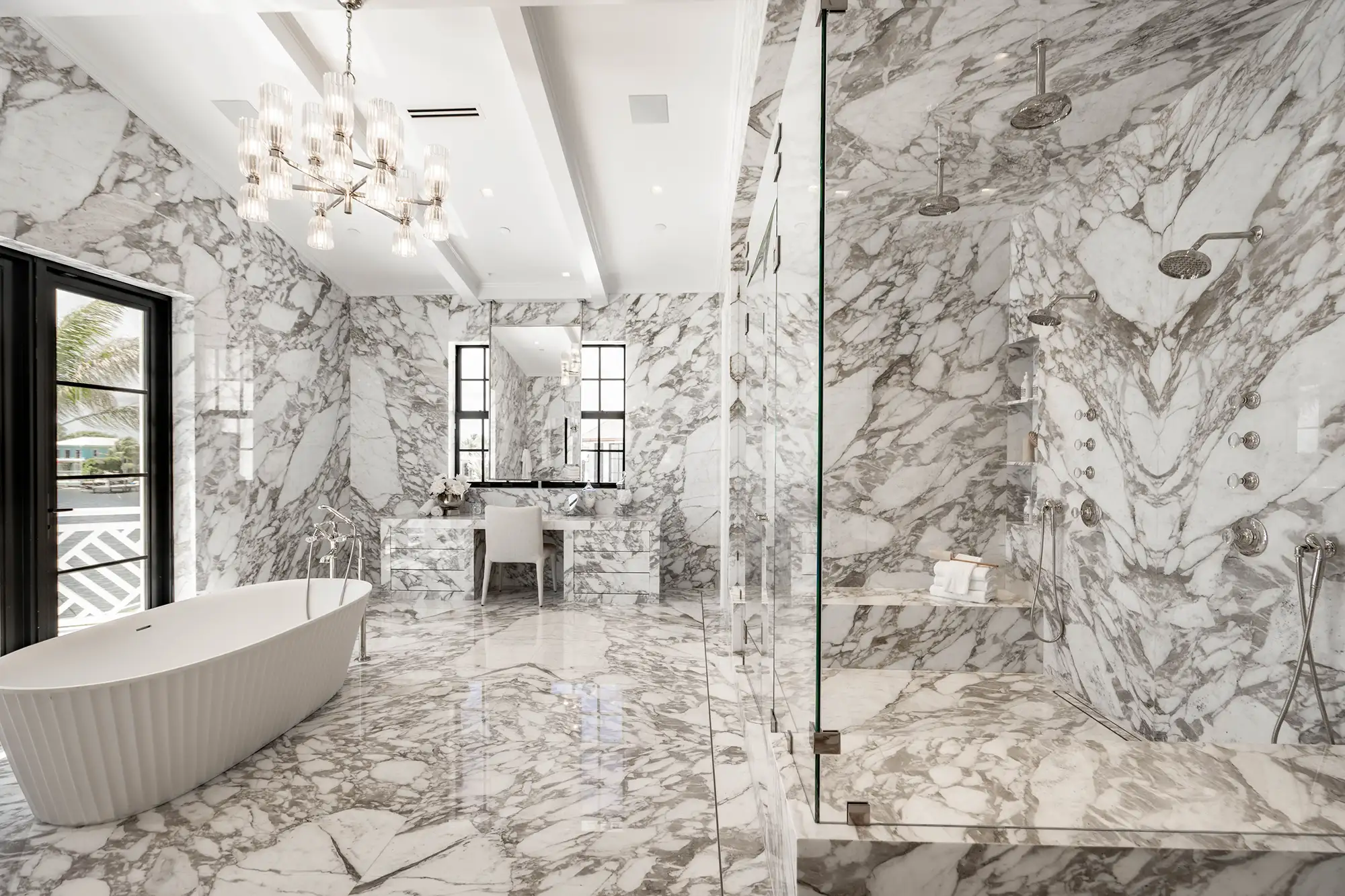 Arabescato Corchia Extra Polished
Understanding Marble's Character
Marble is a natural, living surface, and choosing it well is mostly about understanding how it behaves rather than being caught off guard. It is softer and more porous than granite or quartzite, which is really the flip side of the very quality that makes it so beautiful. In practice that means it can scratch, its edges can chip under a hard knock, and it will absorb a spill that is left to sit. It is also reactive to acids, and that last point brings up a distinction every marble owner should understand, because it is the one that surprises people most.
Etching vs. Staining
A stain is a foreign substance, such as wine, oil, or coffee, soaking into the stone, and it usually shows up darker than the marble around it. Etching is something else entirely. It is a chemical reaction: an acid like citrus, vinegar, wine, or tomato dissolves a microscopic layer of the polished surface and leaves a dull spot, often lighter than the surrounding stone. Here is the point most people miss. Sealing helps with staining by slowing absorption, but it does nothing to prevent etching. Etching is surface chemistry, not absorption, so no sealer can stop it. Knowing that up front changes how you use the stone, and how you feel about the small marks that will, eventually, appear.
Living With Marble Day to Day
None of this is difficult, but marble rewards a few habits. Treat these as the rule rather than the exception:
- Seal it regularly: Reseal every 6 to 12 months to slow staining. It will not stop etching, but it buys you time against spills.
- Use pH-neutral cleaners only: Skip anything acidic or abrasive, including many all-purpose sprays and vinegar-based cleaners, which will etch the surface.
- Wipe spills right away: Acids do their damage in seconds, so blot wine, citrus, and juice the moment they land.
- Keep boards and trivets in play: Cut on a board, rest hot pans on a trivet, use coasters. With marble these are standard practice, not fussiness.
Marble, Quartz, or Quartzite?
What Marble Costs
Marble countertops cost varies more than almost any other surface, because so much of the price is the stone itself. For most projects, installed marble runs roughly $60 to $150 per square foot based on 2026 cost data, while rare, boldly veined statement stones can climb well past $200. A widely quarried white sits within reach of high-end granite; a collector's slab is in another category entirely.
A handful of factors move the number:
- The marble itself: Variety and rarity are the biggest lever, from everyday whites to sought-after stones like Calacatta Viola.
- Thickness: A 3cm slab costs more than 2cm, but reads more substantial and needs less support.
- Finish: Polished, honed, and leathered surfaces carry different price and upkeep profiles.
- Edge & Layout: Waterfall edges, mitered profiles, full-height backsplashes, and book-matched seams all add fabrication time.
- Project Size: Total square footage, and how many slabs your layout requires to keep the veining consistent.
Choosing Your Slab in Person
Seeing full slabs in person, under good light, is the only way to know what you are truly getting.
Popular Marble at Opustone
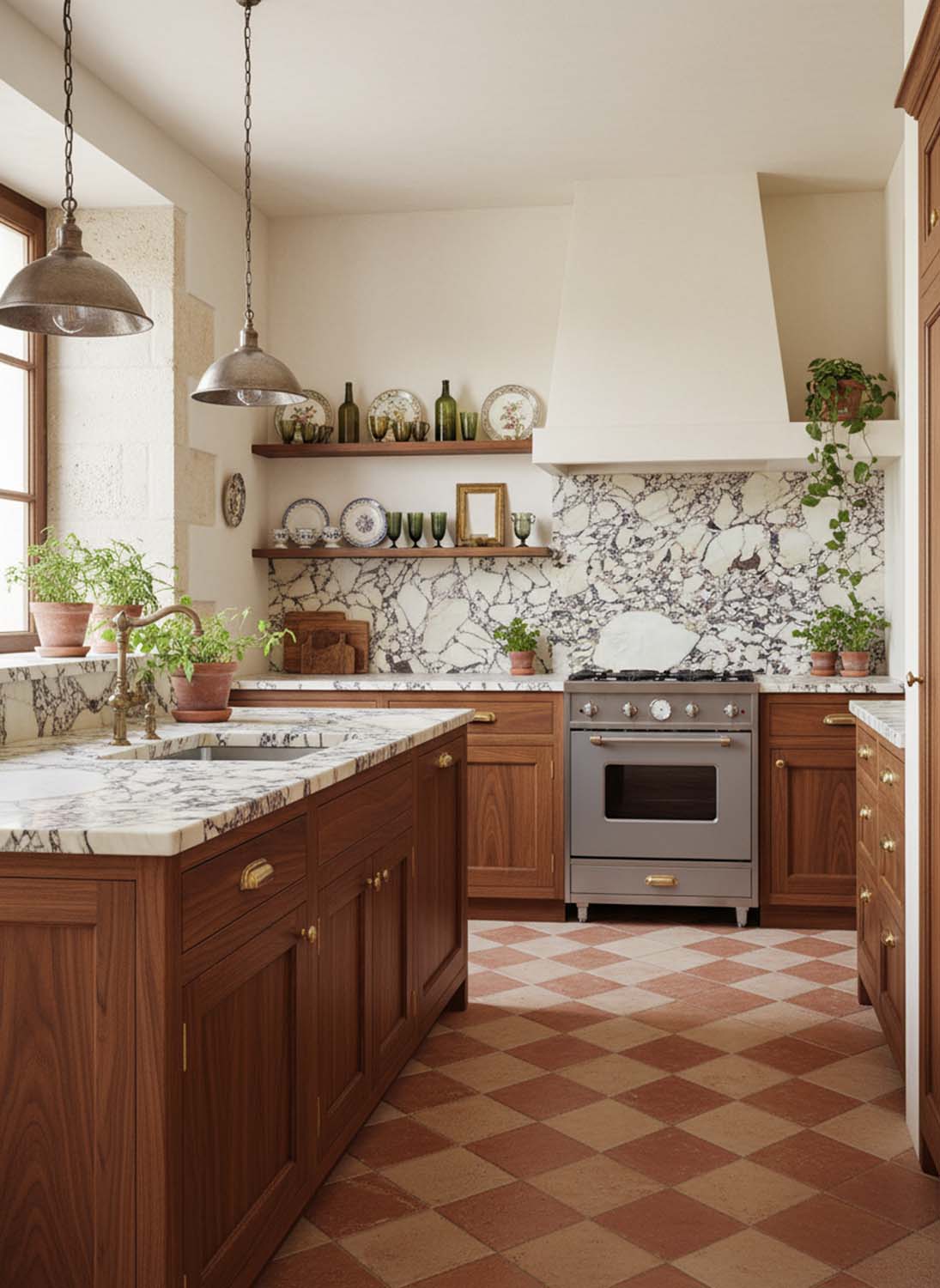
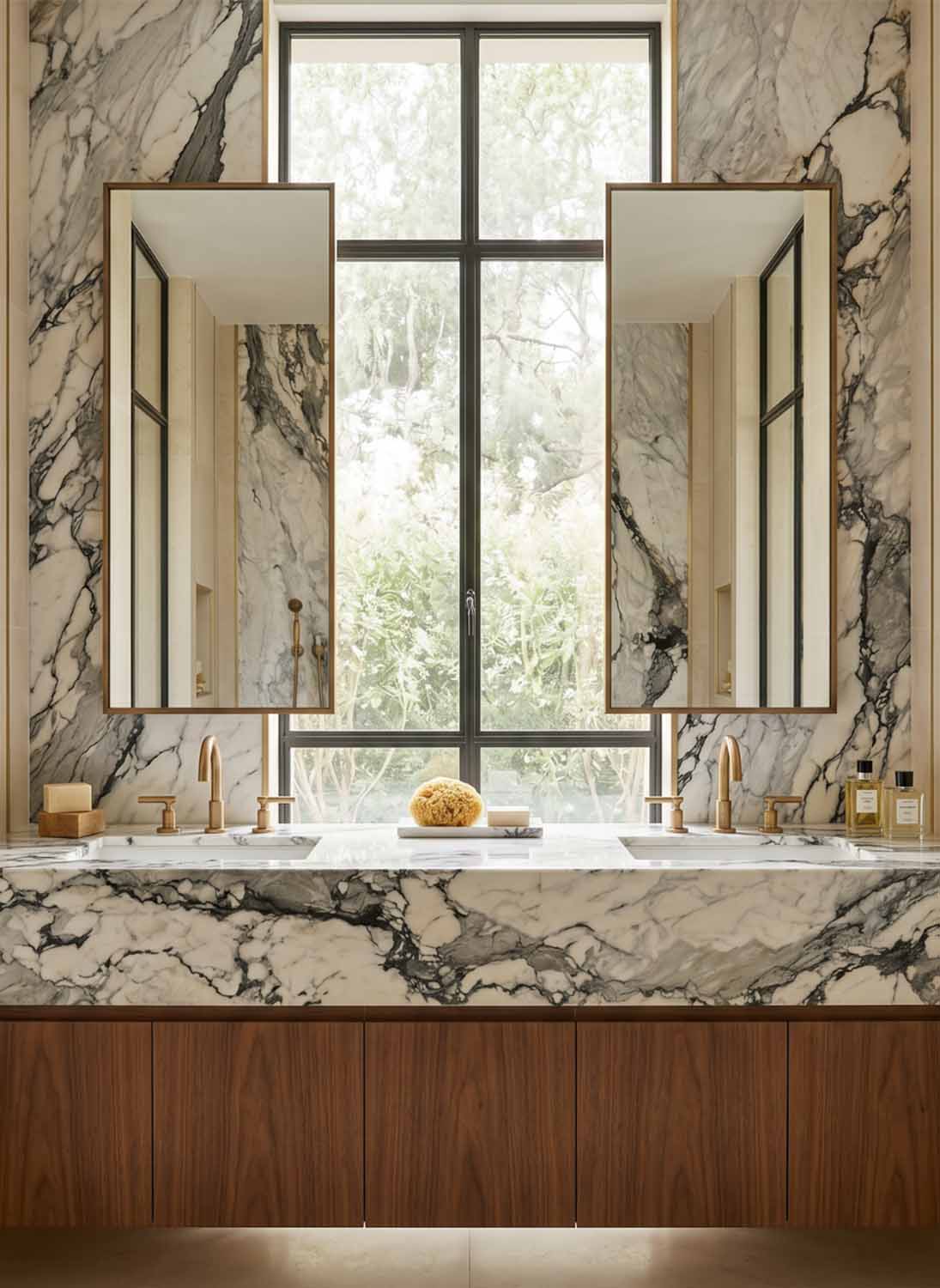
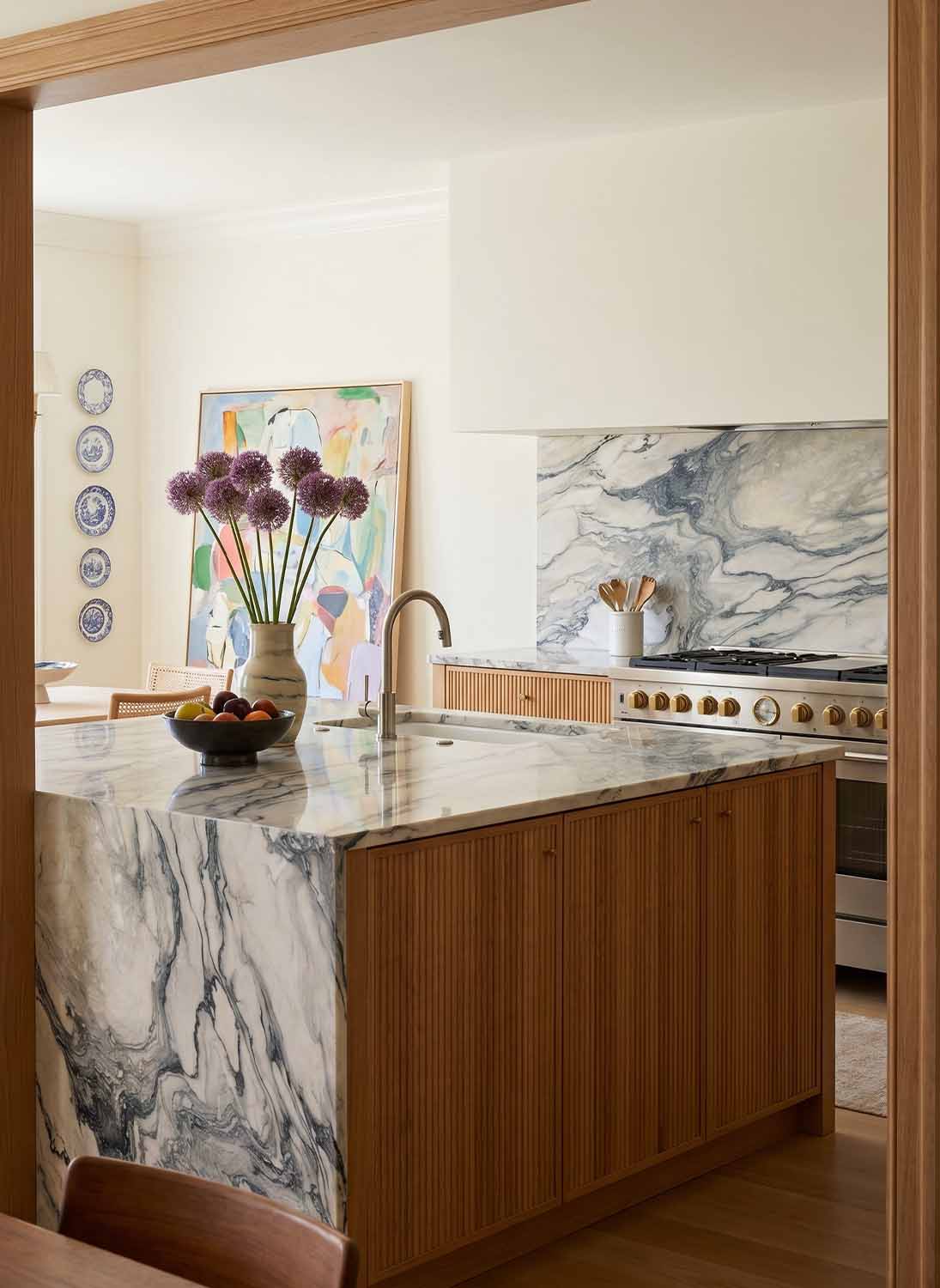
Calacatta Viola has become the collector's marble of the moment: charcoal and chalk-white fields edged with indigo, lilac, and wine, equally at home in a powder room or as a statement island.
Calacatta Cyan reads brighter, an artistic look that takes a white background crossed by warm grey veining and hints of blue and gold.
Cipollino Azul Polished is pure drama, swirling bands of grey, blue, and white that turn a standard kitchen counter into the center point of the room.
Beyond these, favorites like Calacatta Gold Extra and the 200-million-year-old Portoro Extra, an Italian black marble laced with gold, round out a deep and ever-changing selection.
So, Is Marble Worth It?
For the right owner, without question. If you love the look, understand the care, and can embrace a little patina as part of the bargain, nothing else offers marble's depth and character. If you would rather never think about your countertop, a quartzite or quartz will make you happier, and that is not a lesser choice, only a different one. The whole game is matching the material to how you actually live.
The surest way to decide is to stand in front of the stone. If you are looking at marble countertops near you in South Florida, our showrooms let you compare full slabs of marble, quartzite, and quartz side by side, with a team that gives you the honest version rather than the sales pitch.
Browse our slab selection or book an appointment in Miami, Fort Lauderdale, or West Palm Beach, and we will help you find the slab worth building a room around.
Frequently Asked Questions
Marble is porous, so it can stain if a spill is left to soak in, but sealing and prompt wiping keep staining largely in check. The more common surprise for owners is etching, which is a separate issue that sealing does not prevent.
A stain is a substance absorbed into the stone and usually looks darker than the marble around it. Etching is a chemical reaction where an acid dulls the polished surface, usually leaving a lighter mark. Sealing slows staining but cannot stop etching.
No. Sealing reduces absorption, so it helps with staining, but etching is a surface reaction between acid and the calcite in marble. No sealer prevents it. Wiping acidic spills quickly and using pH-neutral cleaners is how you limit etching.
Yes, with the right expectations. Marble handles heat well and looks stunning, but it will scratch and etch with heavy use, so it suits cooks who will maintain it or who welcome a patina. If you want the marble look with far less upkeep, quartzite is worth considering.
About every 6 to 12 months, depending on the marble and how hard the surface is used. Sealing slows staining and is quick to do, but remember it does not protect against etching.
It depends on priorities. Marble offers the softest, most classic look and a naturally cool surface, while quartzite gives a similar appearance with much greater resistance to scratching and etching. For a busy kitchen, many people choose quartzite; for pure character, marble is hard to beat.
It varies with the rarity of the slab more than anything else. Common white marbles are comparable to high-end granite, while rare, dramatic stones cost considerably more. Marble is quoted by the slab, so the best way to get a real number is to see the material in person.