
This guide is written for the way you actually specify stone. What quartzite is, how it holds up against granite and engineered quartz, why it performs so well in our climate, and how to choose a slab that lives up to the renderings. At Opustone, we carry one of the deepest quartzite inventories in the Miami, Fort Lauderdale, and West Palm Beach area, so the colors below are ones you can walk in and see for yourself, not stock photos.
What Quartzite Actually Is
Quartzite begins life as quartz-rich sandstone. Over millions of years, heat and pressure deep in the earth fuse those sand grains into an interlocking, glass-hard mass. That metamorphic process is the whole story behind its performance: the tighter the crystals bind, the harder and less porous the finished stone. It is why true quartzite is one of the most durable natural surfaces you can put in a home. That same pressure also drives minerals into the flowing ribbons and swirls that read so much like marble. The Natural Stone Institute points out that genuine quartzite is often mislabeled in the market, so knowing what you are looking at matters.
Quartzite vs. Granite
The bigger difference for most clients is the look. Granite tends toward flecked, speckled, granular patterns. Quartzite carries soft, marble-like veining, the kind of movement that makes a waterfall island feel like sculpture. If you love the look of marble but not its fragility, quartzite is usually the answer.
Quartzite vs. Engineered Quartz
Quartzite has no resin. It is 100 percent natural stone, and it is UV-stable, holding its color in full sun indefinitely. For an outdoor kitchen, a covered lanai, or a poolside bar, that single fact makes quartzite the stronger choice. Indoors, quartz and quartzite both perform beautifully. The moment you step outside, quartzite wins.
Why Quartzite Belongs in a South Florida Home
Our climate is hard on materials. Heat, humidity, relentless UV, and salt air in coastal neighborhoods will find the weak point in a surface fast. Quartzite answers all four. It is highly heat resistant, so a pan straight off the burner will not scorch it. Its low porosity resists the moisture and humidity that trouble more absorbent stones. It does not react to salt air the way some finishes do. And because it is UV-stable, it performs as well on a sun-drenched patio as it does inside. For homes that blur the line between indoors and out, which is most of them here, one material can run the whole way through.
The Honest Note on Maintenance
Choosing a Slab: Why It Has to Happen in Person
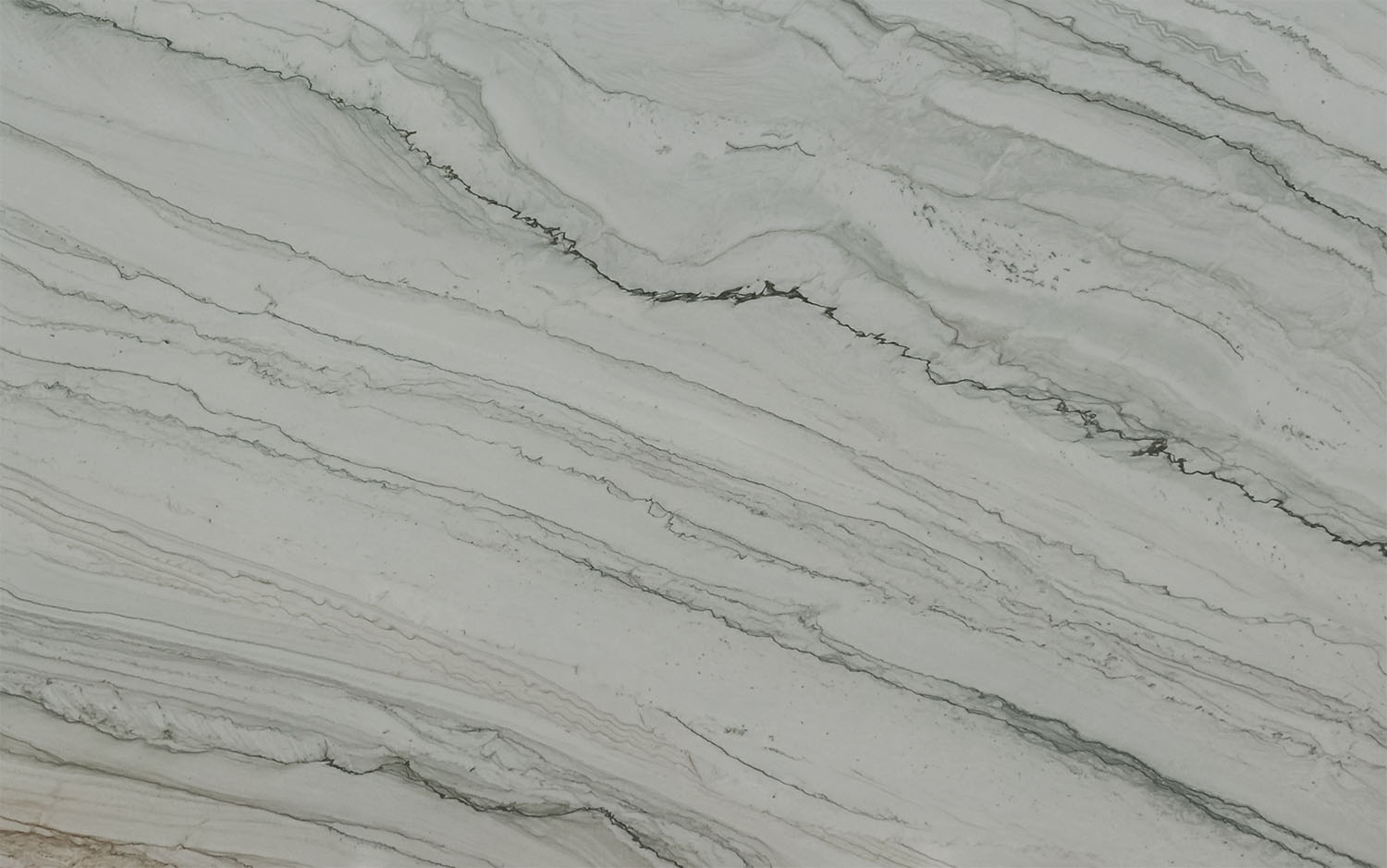 Amazonite Pearl Polished
This is where a deep local inventory earns its keep. Walking the racks, seeing full slabs under natural light, and reserving the exact pieces for your project is the difference between a good result and a showpiece.
A Word on Color and Cost
Quartzite spans nearly the entire color spectrum, from the bright clarity of White Quartz Supreme and the timeless cream of Taj Mahal, to deep greens, periwinkle blues, and near-black dramatics. As for price, quartzite is a premium natural stone, and cost reflects the rarity of the color, the yield of the block, and the thickness of the slab more than any flat list price, which is why we quote by the slab. Expect it to sit alongside high-end granite and above most engineered quartz.
The best way to understand quartzite countertops cost for your project is to see the material and get a quote on the exact slabs you love.
Design Ideas: Six Quartzites Worth Seeing
1. Atlantis Quartzite
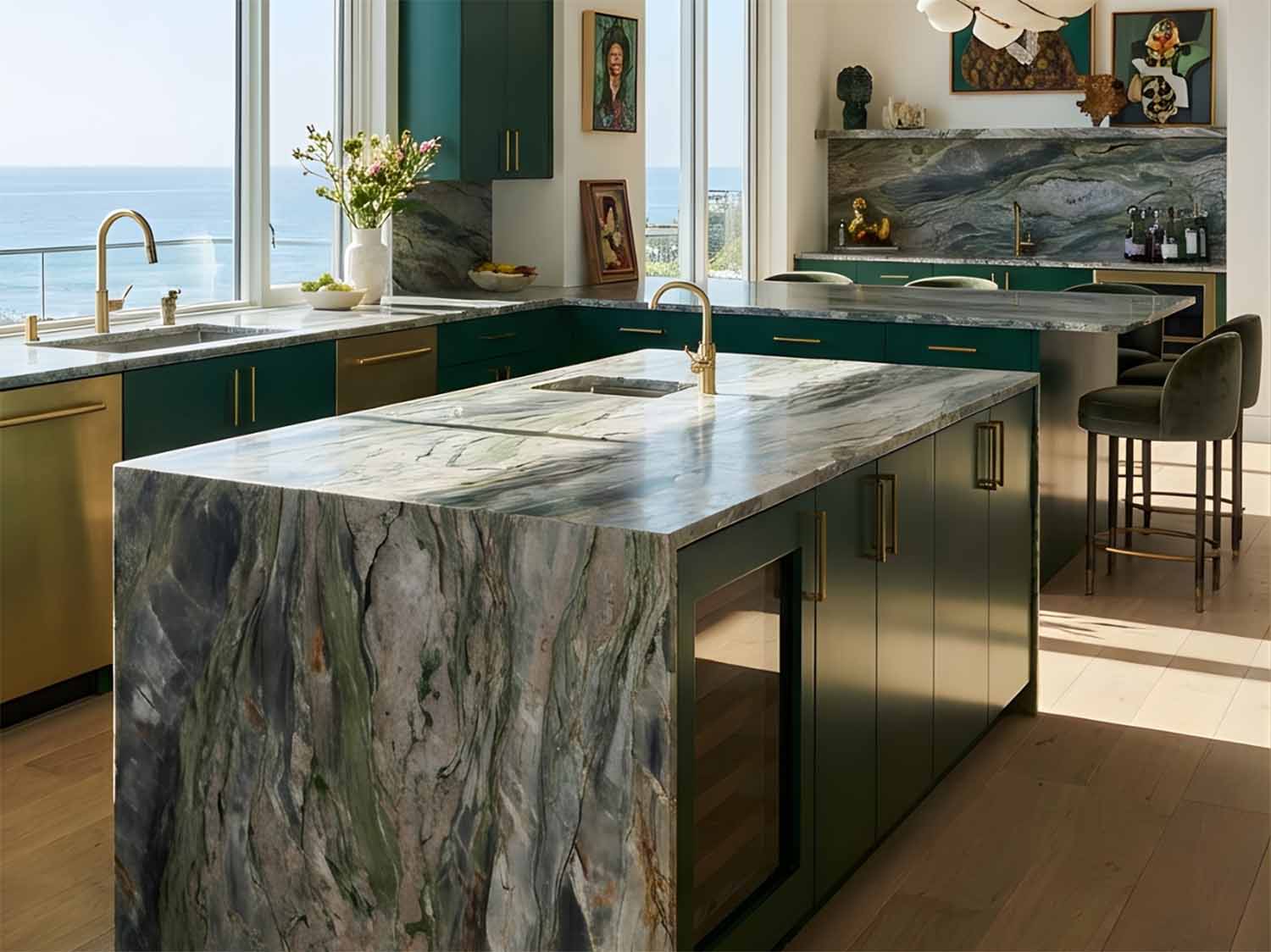
A dramatic green and grey quartzite with river-like movement. Atlantis Polished turns a waterfall island into the centerpiece of the room and pairs beautifully with emerald cabinetry, warm brass, and an ocean view just beyond the glass.
2. White Quartz Supreme
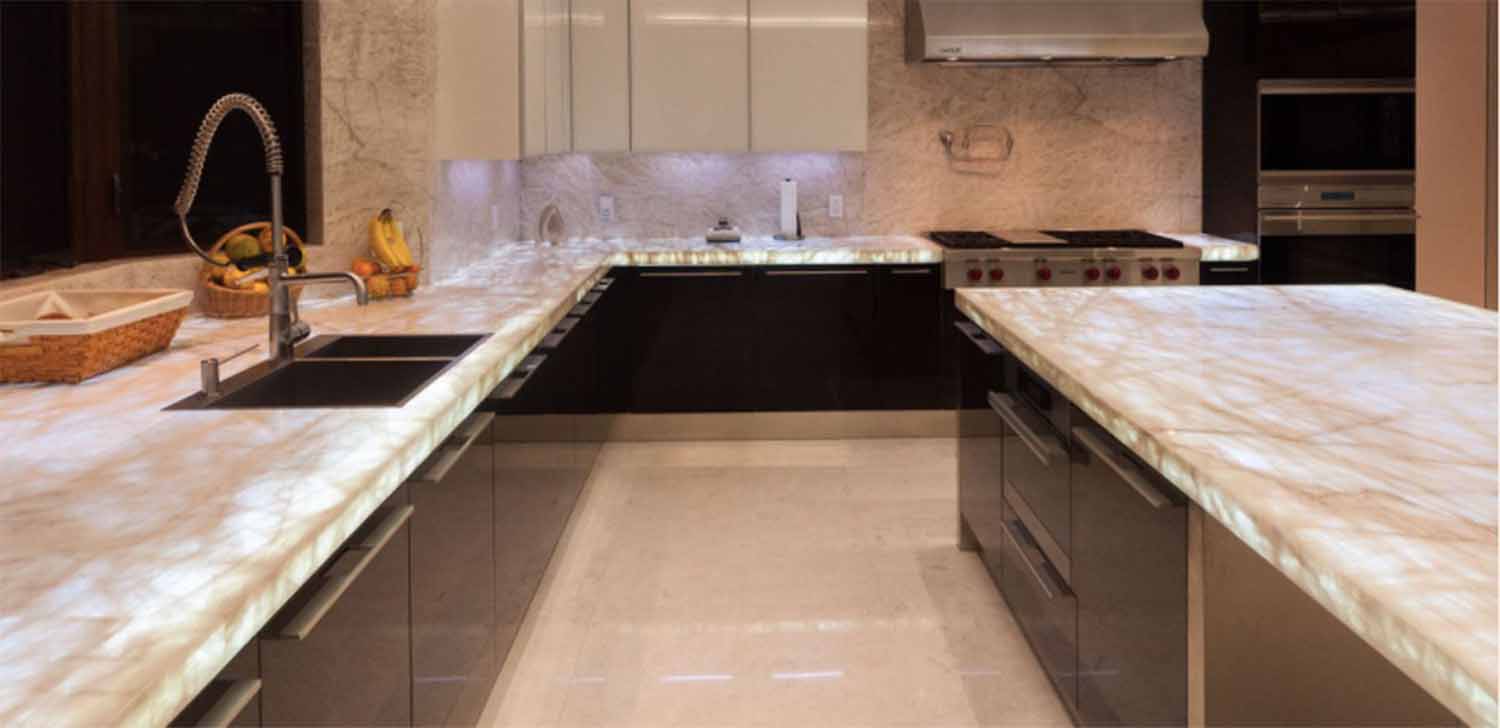
Bright white with ribbons of metallic silver that catch the light. White Quartz Supreme is subtly translucent, so it can be backlit or under-lit to glow, which makes it a showstopper for islands and full-height backsplashes.
3. Murad Polished Quartzite
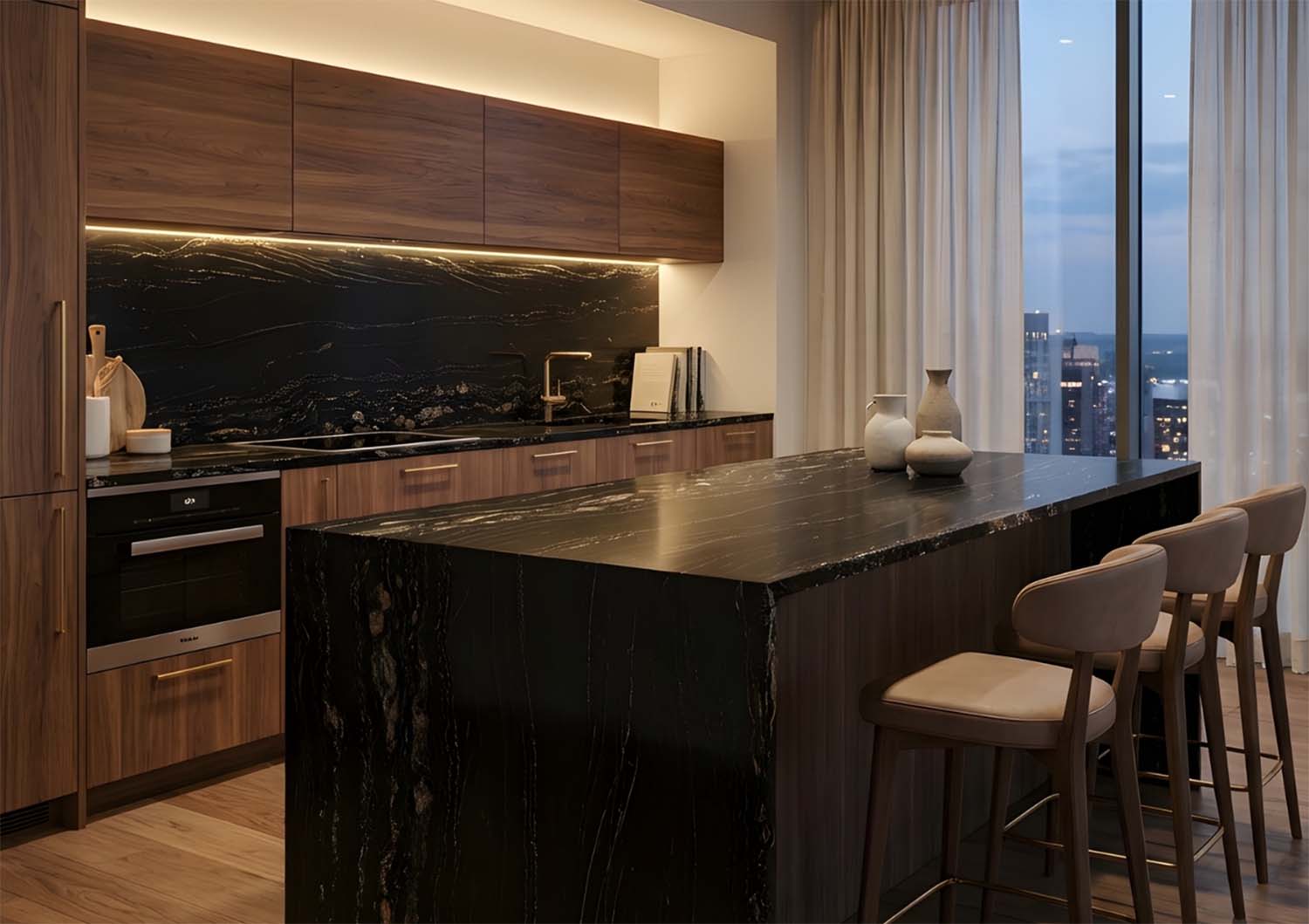
Deep, near-black with white and gold veining. Murad Polished reads as pure drama against walnut cabinetry and evening city light, ideal when you want the counter itself to be the statement piece.
4. Taj Mahal Quartzite
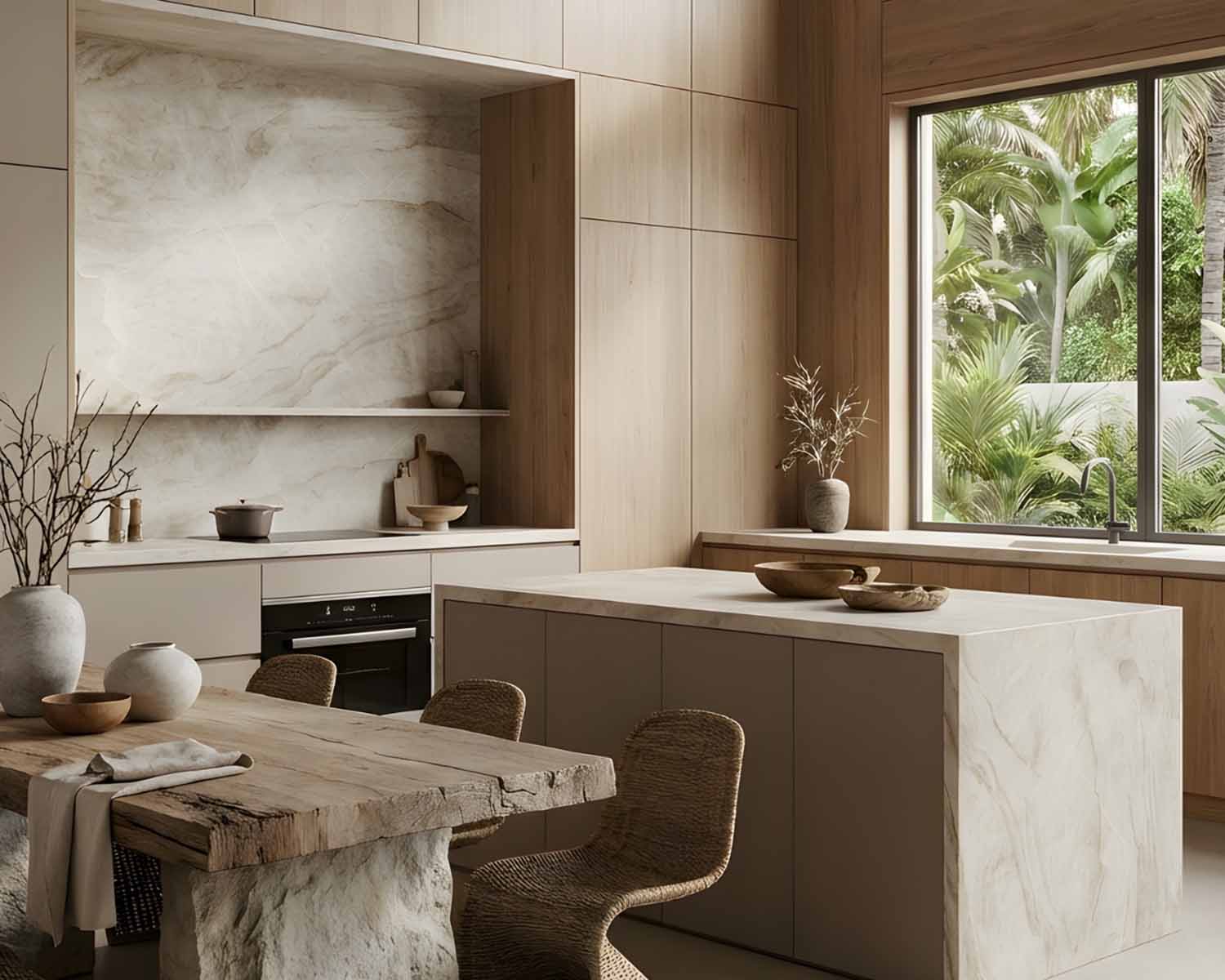
The perennial favorite. Taj Mahal offers warm cream tones and subtle veining, giving you the serenity of marble with far more durability, at home in classic and contemporary kitchens alike.
5. Taj Mahal Leather Quartzite
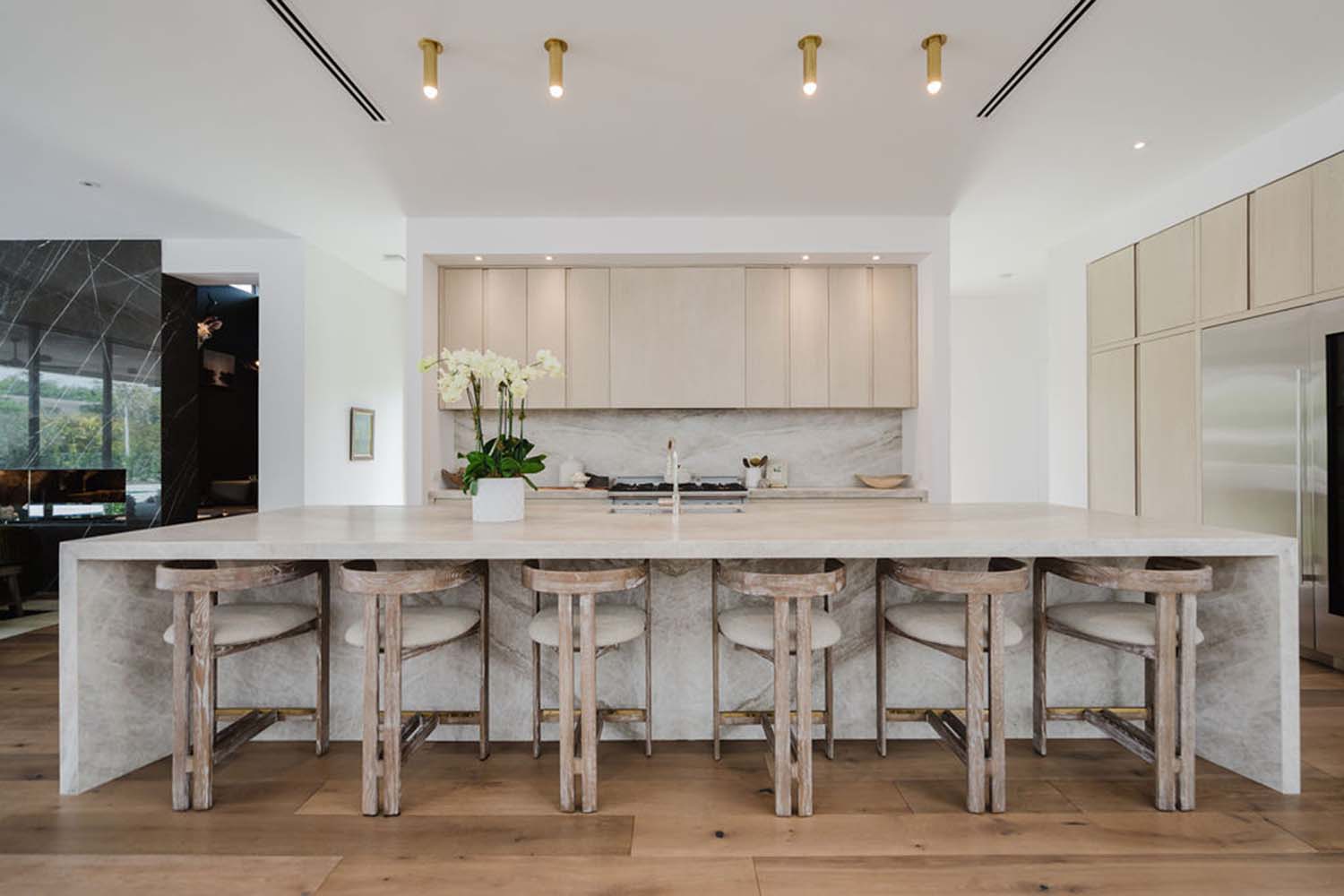
The same warm palette in a leathered finish that adds a soft, matte texture and hides fingerprints and water spots. Taj Mahal Leather smart choice for backsplashes and high-touch surfaces, indoors or on a covered patio.
6. Pink Quartz Quartzite
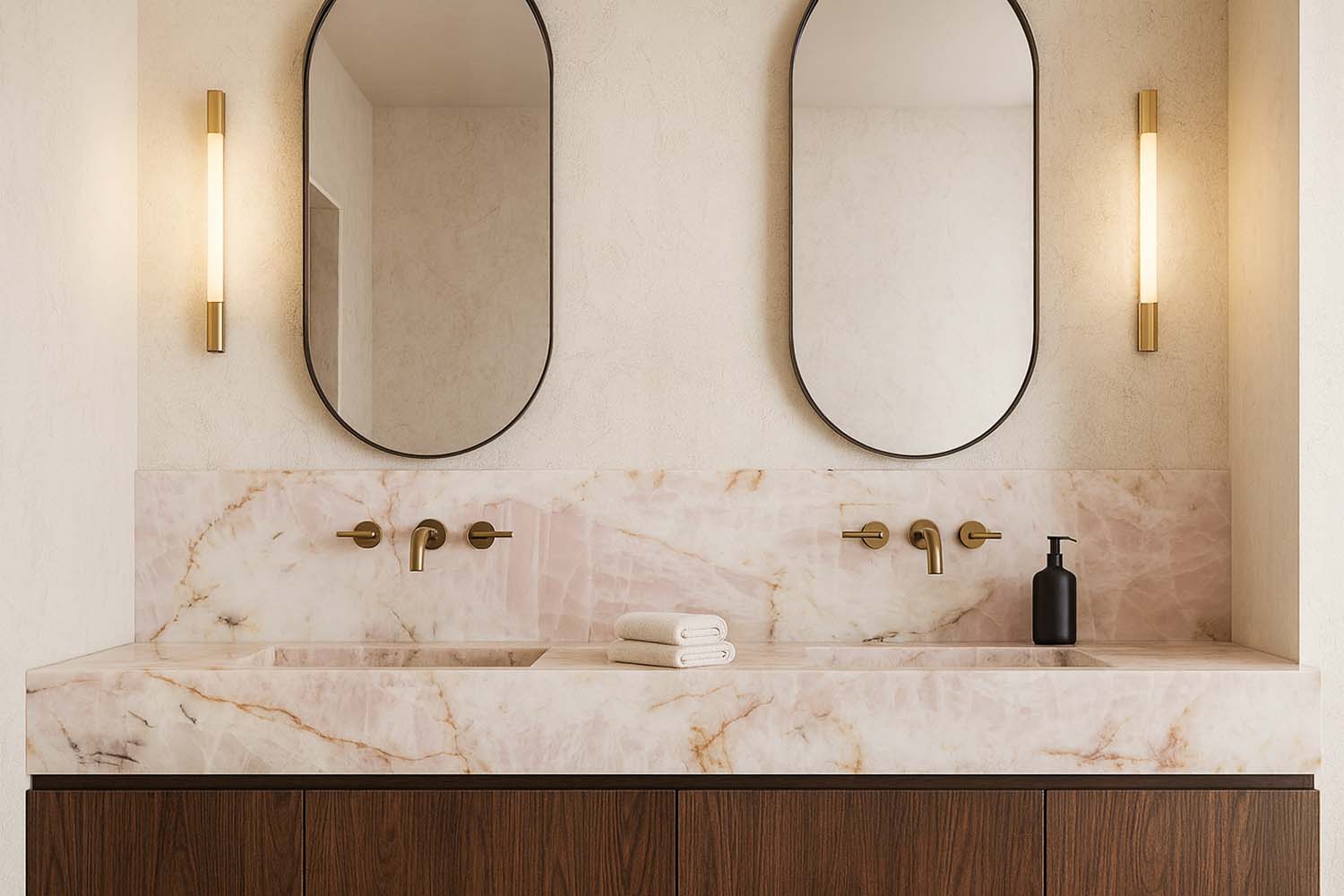
A soft blush pink that reads romance without tipping into theme. Pink Quartz Polished works as easily with brushed gold as with polished nickel, which makes it a favorite for powder rooms and primary baths where you want the stone to set the mood rather than shout.
See Quartzite in Person at Opustone
If you are searching for quartzite countertops near you in South Florida, our three showrooms make it easy to compare materials side by side. Visit us in Miami, Fort Lauderdale, or West Palm Beach to walk the racks, feel the finishes, and reserve the slabs for your project. Browse our slab inventory or book an appointment, and our team will help you find the piece that makes the room.
For more ideas, see how quartzite can enhance any room in your home.
Frequently Asked Questions
Yes, about once a year. Quartzite's low porosity helps it hold a seal well between applications, so annual sealing with a quality impregnating sealer is enough for most homes. It is a quick job and the main upkeep the stone requires.
Generally, yes. Quartzite typically rates a 7 on the Mohs hardness scale, while most granite falls between 6 and 6.5. Quartzite is also usually less porous, which gives it a slight edge in scratch and stain resistance.
Indoors, both perform well. Outdoors or in sun-drenched spaces, quartzite is the stronger choice because it will not fade in UV light. Engineered quartz contains resins that can discolor in direct sun, so it is best kept indoors and out of strong light.
Quartzite is a premium natural stone, generally priced alongside high-end granite and above most engineered quartz. Cost depends on the rarity of the color, the slab thickness, and the size of your project, so it is quoted by the slab rather than a flat rate. Seeing the material in person is the best way to get an accurate estimate.
White Quartz Supreme is the standout, along with White Quartz and White Quartz Extra, all favorites for their bright, marble-like look with far more durability than marble. Because white slabs vary in veining and tone from block to block, selecting yours in person is especially worthwhile.