
You have narrowed it down to two natural stones, and now you want a real answer. Quartzite vs granite is one of the most common countertop decisions we help people work through, and the honest truth is that neither is the better stone for every kitchen.
Here is the short version. Quartzite generally wins for buyers who want a marble-like look with exceptional hardness and flowing natural movement. Granite remains an excellent choice for buyers who prioritize proven durability, heat resistance, broad availability, and often more approachable pricing. The rest of this guide shows where each one pulls ahead, so you can match the stone to your priorities.
Quartzite vs. Granite at a Glance
Before we get into the detail, here is the quick comparison for the factors that matter most during selection.
| Quartzite | Granite | |
|---|---|---|
| Hardness | Harder, around 7 on the Mohs scale | Around 6 to 6.5 on the Mohs scale |
| Heat resistance | Excellent | Excellent |
| Scratch resistance | Excellent, very hard surface | Excellent for everyday use |
| Stain resistance | Good; often low-porosity | Good; varies by variety |
| Sealing | Usually sealed; low porosity holds well | May need sealing; depends on the slab |
| Maintenance | Low | Low |
| UV stability | UV-stable, outdoor-capable | UV-stable, outdoor-capable |
| Appearance | Flowing, marble-like veining | Granular and speckled; premium can be dramatic |
| Price | Often a higher tier | Broad range, more entry-level options |
| Best for | Marble look, statement islands, hardness | Durability, heat, color range, budget flexibility |
What Each Stone Actually Is
The differences start with how each stone forms. Granite is an igneous rock, created as molten rock cools and crystallizes deep in the earth. That crystalline structure is what gives granite its speckled, granular look and its toughness.
Quartzite begins as quartz-rich sandstone, then intense heat and pressure transform it into a dense, hard stone. That process is what produces its flowing, marble-like veining. If you want the full background on each, our quartzite guide and granite guide go deeper, and our roundup of the best countertop stones puts both in context.
Durability and Hardness
Both are highly durable natural stones. The difference is the degree. True quartzite is generally harder, rating around 7 on the Mohs scale, where most granite lands around 6 to 6.5, as the Natural Stone Institute notes. In practice, that makes quartzite a touch more scratch resistant. It does not make granite fragile. Granite handles normal kitchen use beautifully and has done so in millions of homes. If maximum hardness is the goal, quartzite edges it. For everyday practicality, both are excellent.
Heat Resistance
This is a category where both natural stones shine, and where they beat resin-based engineered quartz. You can set a hot pan on either quartzite or granite without the scorching risk that comes with quartz. That said, we still recommend trivets as a habit. Neither stone is truly indestructible, and thermal shock or repeated direct heat is worth avoiding on any surface.
Porosity and Sealing
Both materials can require sealing, but the requirement varies by the specific slab, not just the material. Quartzite is often relatively low in porosity, so it tends to hold a seal well. Granite porosity varies considerably from one variety to the next. Rather than following a blanket resealing schedule, follow your fabricator's guidance for your specific stone. A simple water-drop test tells you when it is time: if water soaks in instead of beading, reseal.
Appearance Is the Biggest Difference
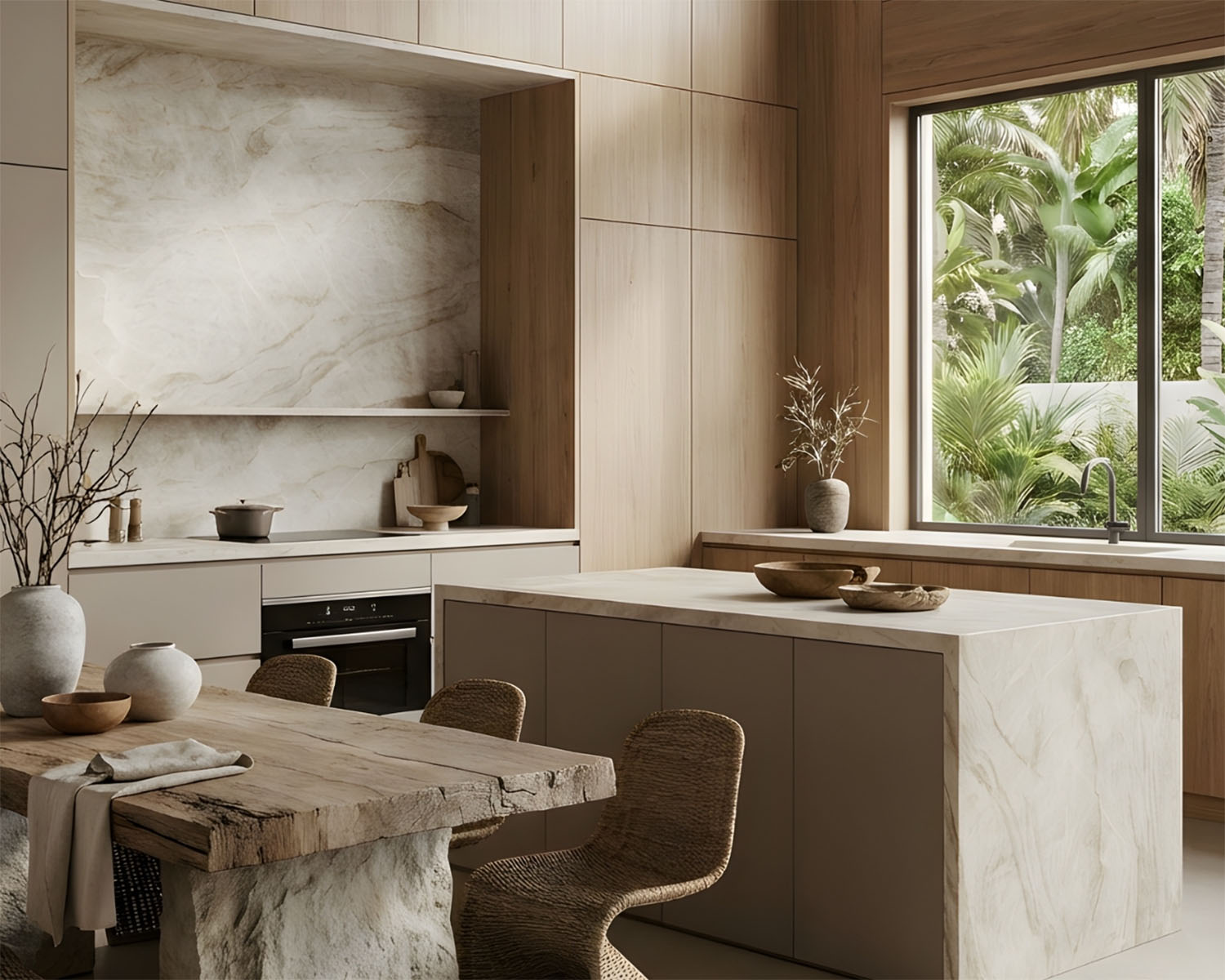
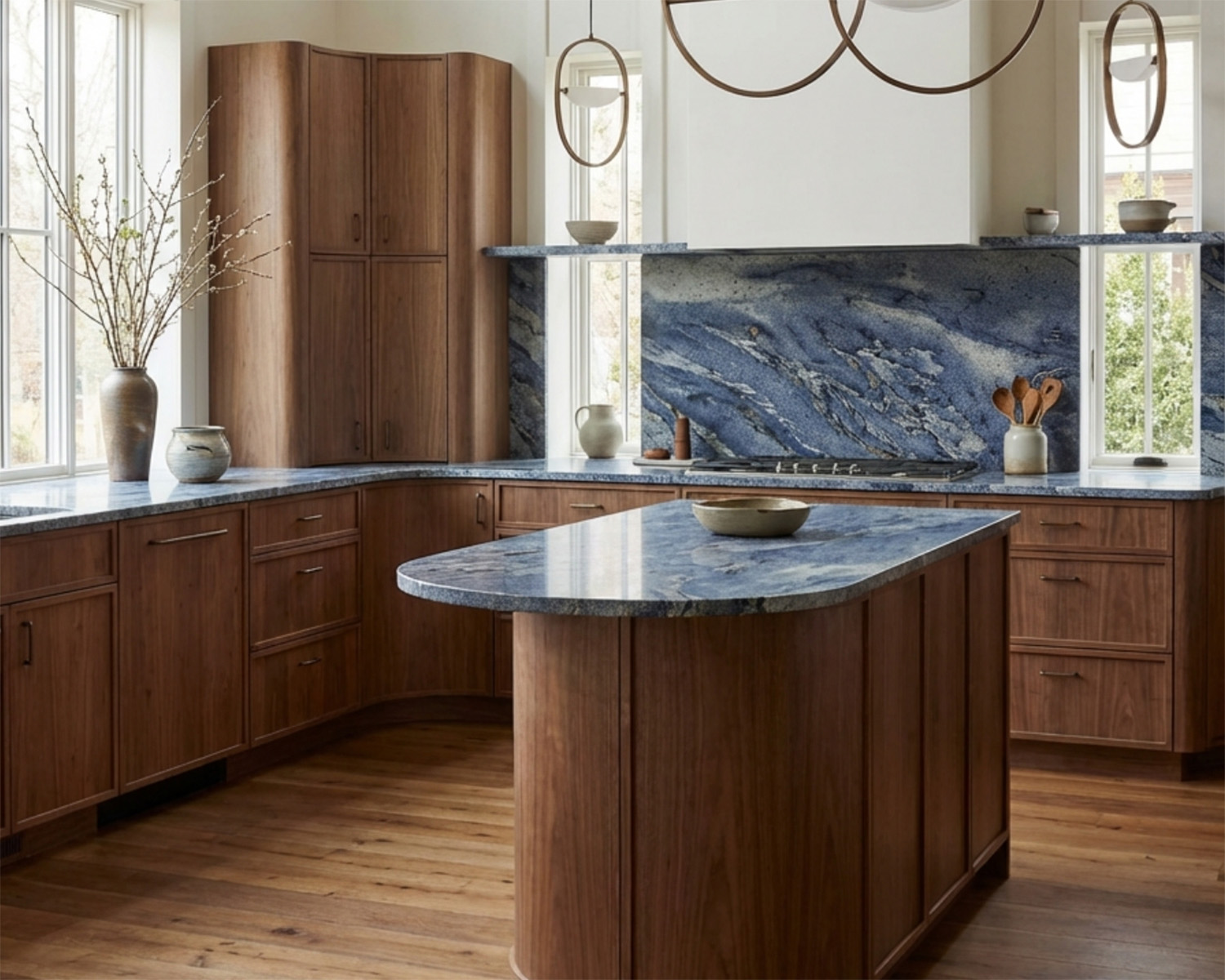
For most buyers, looks decide it. Quartzite is chosen for its flowing veining and soft, marble-like movement, in whites, creams, beiges, greys, and richer colors. Granite tends toward a more granular, speckled, crystalline pattern, though premium granites can be every bit as dramatic. This is where the granite vs quartzite question stops being technical and becomes visual. Decide what you want the counter to say in the room, then let performance narrow the field.
No Two Slabs Are Alike
Both are natural, so every slab is one of a kind. That matters more than any spec sheet. With quartzite especially, vein direction becomes a design feature on an island, a waterfall edge, or a full-height backsplash, so the specific slab you choose shapes the whole look. See the actual slab in person before you commit. A photo cannot tell you how the movement will land in your space.
Cost
Neither stone is automatically cheaper across the board. Granite generally offers more entry-level options thanks to its broad availability, which makes it easier to find something budget-friendly. Premium and exotic granites, however, can climb right into quartzite territory. Quartzite often sits in a higher tier because of slab cost and more demanding fabrication. When you compare, look at the total installed cost for your project, not just the price per slab.
Fabrication
Quartzite's hardness is a benefit in daily use and a challenge in the shop. It can be more demanding to cut and finish, which can raise labor and tooling costs. Granite is familiar territory for most experienced fabricators. That said, complex veining, mitered edges, and bookmatching call for real skill with either material, so an experienced fabricator matters regardless of which stone you choose.
Both Work Outdoors in Florida
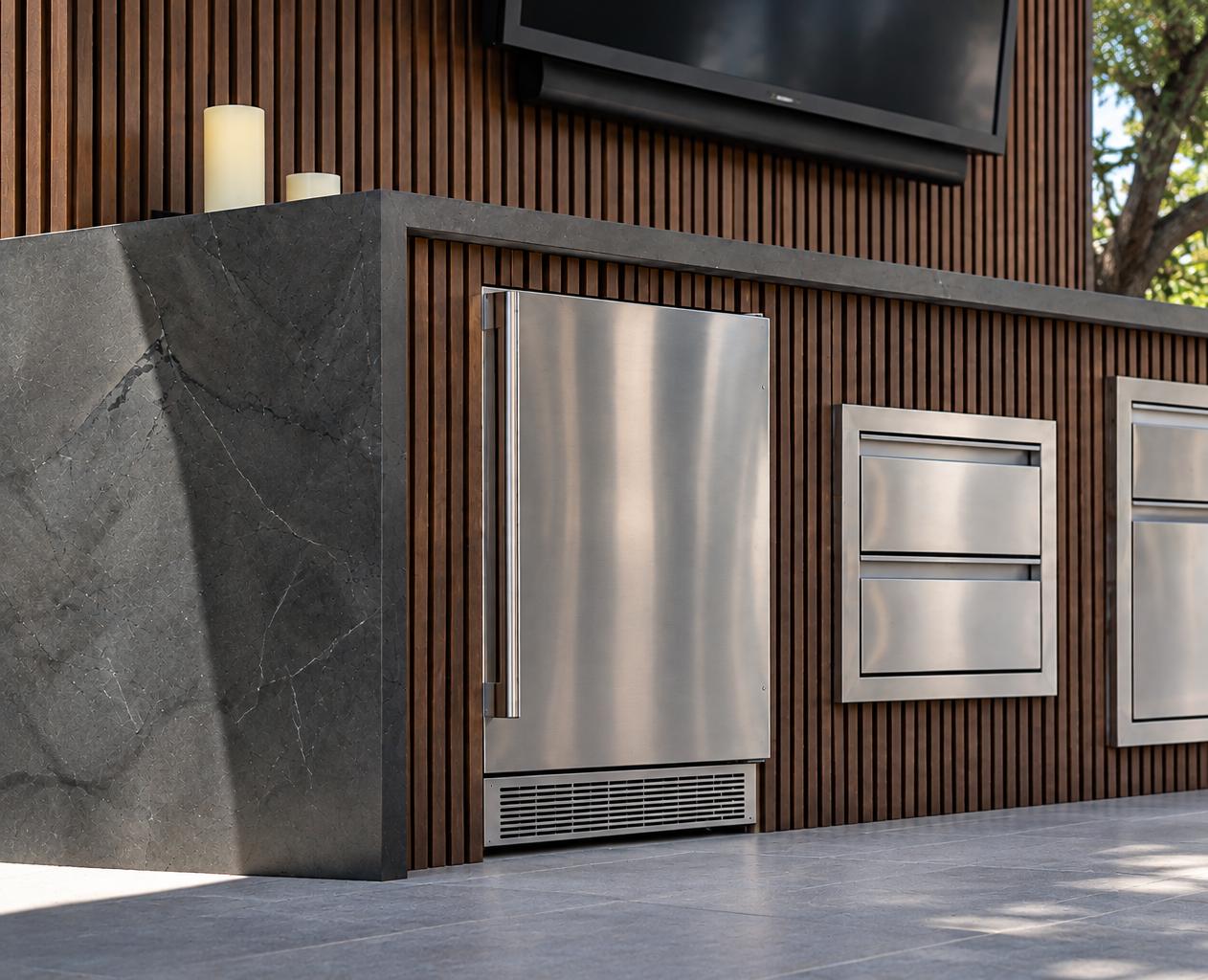
Here is a genuine advantage both natural stones share. Because granite and quartzite are natural and UV-stable, both can be used in covered outdoor kitchens and patios, where engineered quartz can fade in the sun. The key is matching the stone, finish, sealing, and installation to outdoor conditions.
One myth worth clearing up: Florida's ambient humidity is not usually what determines how an indoor granite or quartzite counter performs. For an indoor kitchen, daily use, spills, and sealing matter far more. It is direct sun, heat, and true outdoor exposure that raise the stakes, which is why the outdoor conversation is the one worth having carefully.
Which Should You Choose?
It comes down to your priorities.
- Choose quartzite if you want dramatic natural veining, a marble-inspired look, maximum hardness, or a statement island.
- Choose granite if you want proven durability, heat resistance, the widest range of colors, or more options across different budgets.
- Compare actual slabs if appearance is the deciding factor. Natural variation between individual slabs can matter more than any general rule about the material.
Compare Them Side by Side
Specs get you part of the way, but this decision is best made with your eyes. Quartzite and granite each have a range wide enough that the individual slab often matters more than the material category.
Visit an Opustone showroom in Miami, Fort Lauderdale, or West Palm Beach to compare granite and quartzite slabs side by side, in person. Bring your cabinet, flooring, backsplash, or paint samples so the decision accounts for undertone and movement, not just performance.
Browse the slab collection or book an appointment, and our team will help you land on the right stone.
Frequently Asked Questions
Neither is universally better. Quartzite is harder and offers a marble-like look, while granite is exceptionally durable, widely available, and often more budget-flexible. The right choice depends on your priorities and the specific slabs you compare.
Granite is very scratch resistant, but true quartzite is generally harder, around 7 on the Mohs scale versus roughly 6 to 6.5 for granite, so quartzite resists scratching slightly better. Both hold up well to normal kitchen use.
Not necessarily. Both may need sealing depending on the slab. Quartzite is often low-porosity and holds a seal well, while granite porosity varies by variety. Follow your fabricator's guidance and use a water-drop test to know when to reseal.
Quartzite frequently costs more, due to slab pricing and more demanding fabrication. Granite has more entry-level options, though premium and exotic granites can overlap with quartzite. Compare total installed cost rather than slab price alone.
Yes. Both are natural, UV-stable stones, so they can work in covered outdoor kitchens and patios where engineered quartz can fade. The stone, finish, sealing, and installation all need to suit outdoor conditions.
Both are excellent for daily use. Quartzite's extra hardness gives it a slight edge in scratch resistance, while granite's durability and heat resistance make it a proven workhorse. Either will serve a busy kitchen well with basic care.