
Grey is one of the most searched countertop colors, and one of the most misunderstood. It is not a single look. It is a whole family of looks, from pale silver to deep charcoal, and the differences between them change a room completely.
This guide treats grey as a design category, not a color chip. We focus on marble and quartzite, the two natural stones that deliver that cool-toned beauty with very different performance. The goal is to help you move past searching for grey countertops and start choosing the right undertone, veining, finish, and stone for your space.
Not All Grey Looks the Same
Before you fall for a slab, it helps to know which grey you are actually after. The category breaks down into a handful of distinct looks:
- Light silver-grey: pale, airy, and bright, the softest way to bring grey into a room.
- White with grey veining: the classic marble look, a white or pale background with grey movement.
- Blue-grey: cooler and more architectural, with a moody, contemporary edge.
- Warm greige: grey with a taupe or beige undertone that reads soft and inviting.
- Deeper charcoal and smoke: dramatic and grounding, chosen for contrast rather than calm.
Once you can name the look you want, everything else, stone, finish, and cabinetry, gets easier to decide.
Grey Quartzite
If you love marble's movement but want more muscle, grey quartzite is usually the answer. It offers similar cool-toned veining with far greater durability, resisting the scratches, etching, and everyday wear that make marble owners nervous. Grey quartzite spans a wide range, from very pale grey and white to dramatic blue-grey and charcoal. Opustone highlights grey-blue Balboa quartzite as a favorite in that moodier direction, part of a growing appetite for deeper, more atmospheric stone.
For more on the material, see our guide to quartzite.
Grey Marble
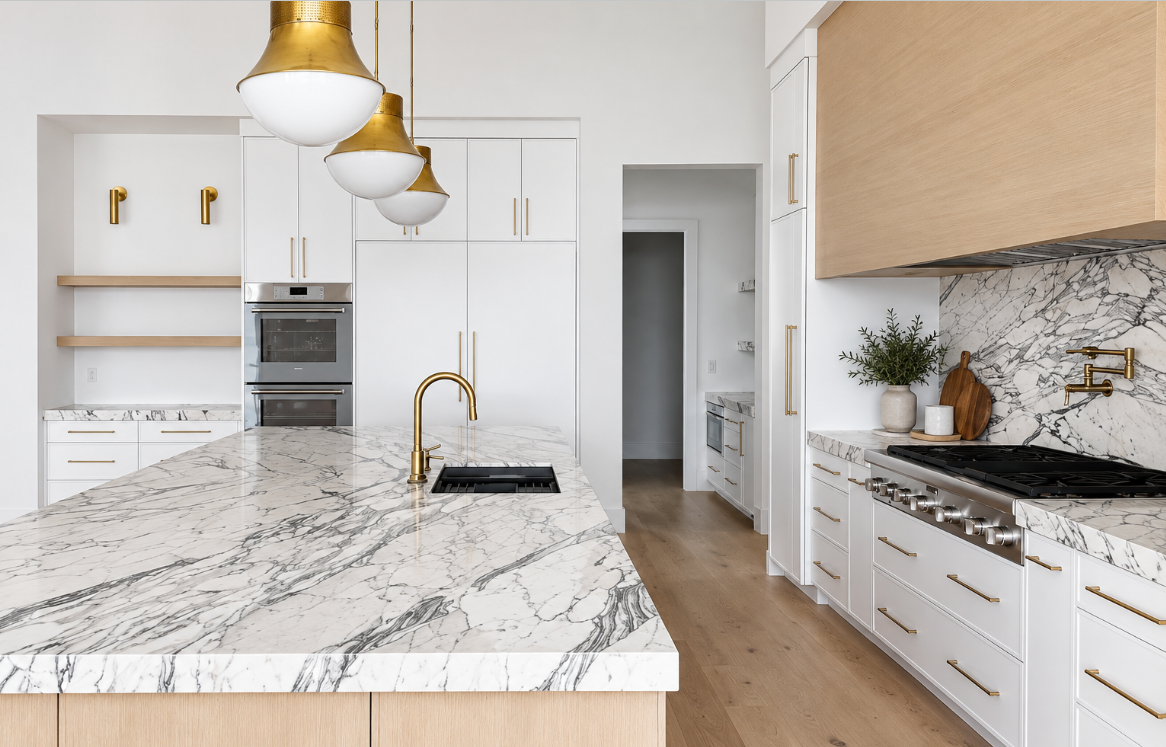
Marble is the most recognizable way to get a white-and-grey countertop. Its soft, natural veining ranges from a whisper of grey to bold, sweeping movement, and nothing else quite matches that organic elegance. It is the reason grey marble has anchored beautiful kitchens and baths for centuries. The trade-off is care. Marble is soft and porous, so it etches from acids like citrus and wine, and it can scratch and stain without sealing.
Our marble countertops guide covers that maintenance in depth. In short, grey marble rewards owners who will maintain it, or who welcome a little patina.
Grey Marble vs. Grey Quartzite at a Glance
Both give you a cool-toned, veined look. They behave very differently day to day. Here is the quick comparison.
| Grey Marble | Grey Quartzite | |
|---|---|---|
| Appearance | Soft, classic veining in white and grey | Marble-like movement, pale grey to blue-grey and charcoal |
| Hardness | Softer, around 3 on the Mohs scale | Hard, around 7 on the Mohs scale |
| Etching | Etches from acids like citrus and wine | Resists etching |
| Sealing | Seal about yearly, more often in wet areas | Seal about yearly, and it holds well |
| Heat resistance | Good | Excellent |
| Maintenance | Higher; wipe spills fast, pH-neutral cleaners only | Lower; easy daily care |
| Best for | Baths, low-traffic areas, design purists | Busy kitchens, islands, indoor-outdoor |
Light Grey Countertops
Pale grey and soft white-grey stone is the easy win when a kitchen needs contrast without the starkness of pure white. It reads calm and bright, but it has just enough depth to feel intentional. Light grey countertops are also flexible with cabinetry. Pair them with white cabinets for a serene, tonal look, with natural oak for warmth, or with dark cabinetry when you want stronger contrast without going bold on the stone itself.
White and Grey Marble Countertops
The most classic version of this palette is a white or pale background carried by grey veining. When people picture white and grey marble countertops, this is usually it. The key variable is vein scale. Fine, delicate veining creates a quiet, restful surface that recedes into the room. Larger, sweeping veins turn the countertop into the focal point. Neither is better. It comes down to whether you want the stone to whisper or to speak.
Cool Grey vs. Warm Grey
This is the detail most people miss, and it makes or breaks the room: grey has an undertone. A blue-grey stone reads crisp and architectural, and it pairs beautifully with cool whites and modern finishes. A taupe-grey or greige leans warm, and it sits far more naturally with cream cabinetry, warm woods, brass, and beige flooring. Getting the undertone right matters more than the exact shade.
Our guide to neutral pairings is a helpful starting point, and it is always worth bringing cabinet, flooring, and paint samples when you select stone.
Lighting Changes Everything
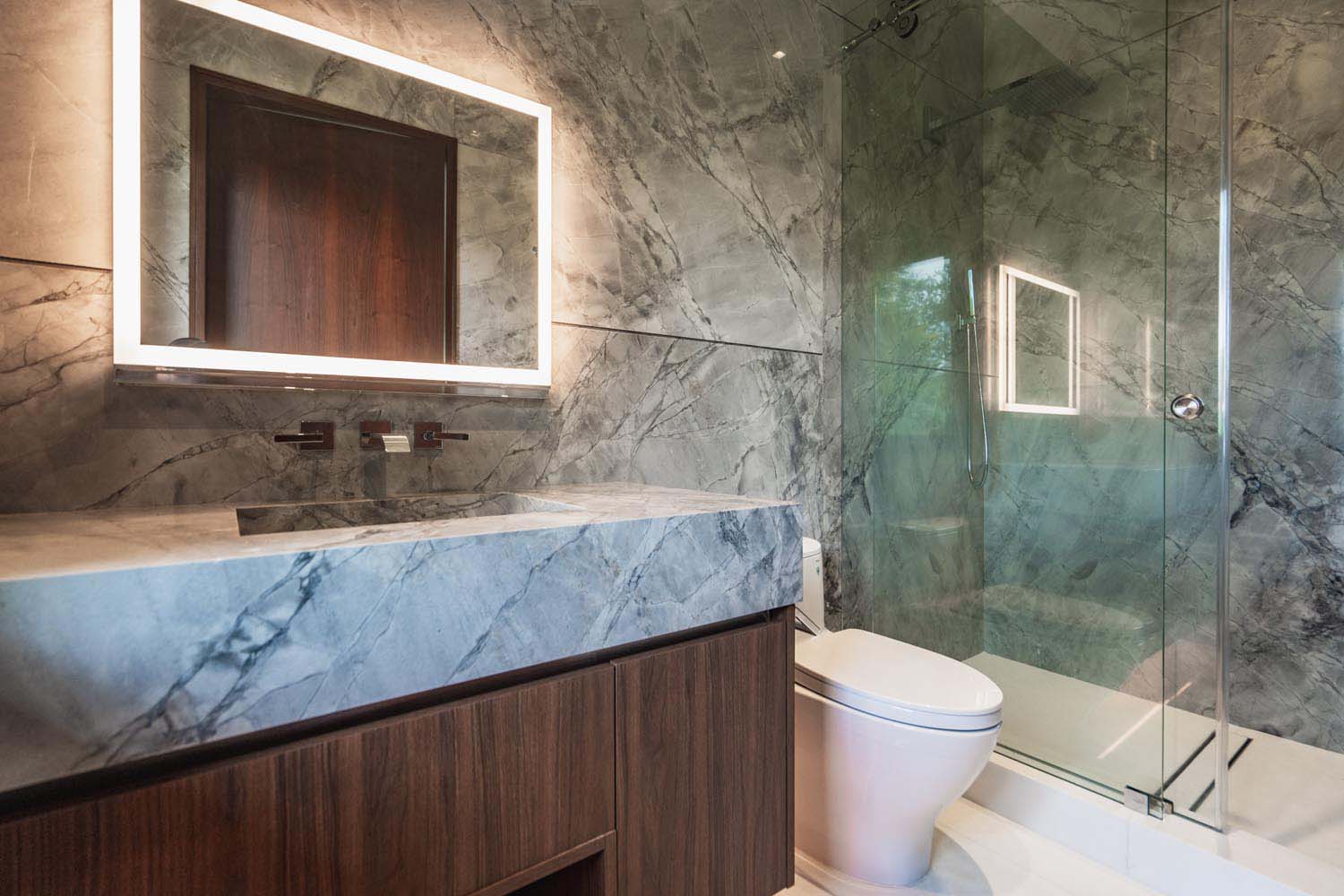
Grey is the color most affected by light. The same slab can look cool and blue under bright South Florida daylight, soft and warm under interior lighting, and almost steely under cooler LEDs. That is why a small sample can mislead you. View grey slabs at full scale, and, whenever possible, look at them alongside the actual cabinetry, flooring, and paint going into the room.
Finish Changes the Color, Too
Finish shifts how grey reads. A polished surface makes grey look deeper and more reflective, with more contrast in the veining. A honed or leathered finish softens that contrast and can make a darker slab feel more understated and organic. Opustone carries slabs across polished, honed, leather, matte, and textured finishes, so the same grey stone can feel formal or relaxed depending on how it is finished.
Grey Is More Than Minimalist
Grey does not have to mean a pale, minimalist kitchen. It scales up beautifully. Use it on a waterfall island, carry it up the wall as a full-height backsplash, or bring it into a bathroom vanity, a fireplace surround, or a bar area. Darker charcoal and smoky stone in particular can create a dramatic, almost masculine mood, a world away from the airy grey kitchens the color is often associated with.
Which Grey Is Right for You?
Still narrowing it down? Match the mood to the stone.
- Light silver-grey: bright, airy interiors.
- White with grey veining: a classic marble look.
- Greige: warmer interiors with wood and cream.
- Blue-grey: cooler, contemporary spaces.
- Charcoal: dramatic, high-contrast rooms.
Find Your Grey
Grey is the one color you truly cannot judge from a screen. Undertone, veining, and finish all shift with the light and the room around them. The only way to be sure is to see full slabs in person.
Visit an Opustone showroom in Miami, Fort Lauderdale, or West Palm Beach to compare grey marble and quartzite side by side, under real light, next to your own samples.
Browse the slab collection or book an appointment, and our team will help you find the grey that fits your space. We carry both marble and quartzite, and we provide samples for most of what we stock.