
If you have ever crossed a concrete pool deck barefoot at noon, you already know the problem. In a Florida summer, the wrong surface turns a patio into a hot plate. Travertine solves it. Outdoor travertine tile stays notably cooler underfoot than concrete, standard pavers, or dark tile, and the reason comes down to simple physics.
Why Travertine Stays Cooler
Two things keep travertine cool in direct sun. The first is color. Travertine's light, natural tones reflect sunlight instead of absorbing it. Dark surfaces do the opposite. A dark pavement can absorb 80 to 95 percent of the sunlight that hits it, according to the Lawrence Berkeley National Laboratory's Heat Island Group, and that energy becomes surface heat. A pale travertine bounces much of it away.
The second is structure. Travertine is naturally porous, and that open structure lets heat dissipate rather than build up at the surface. A dense, dark material does the reverse: it stores heat and holds onto it. Put the two together, reflective color plus a breathable surface, and you get a floor that stays comfortable while everything around it bakes.
How It Compares
Here is roughly how the common outdoor surfaces rank in direct sun, coolest to hottest underfoot:
- Light travertine: among the coolest options, thanks to reflective tones and a porous surface.
- Concrete pavers: denser and often grayer, they absorb and hold more heat, so they run warmer than light travertine.
- Poured concrete: tends to get hot and stay hot, with no texture to help.
- Dark porcelain and dark natural stone: the hottest of the group, because dark, dense surfaces absorb the most sunlight and release it slowly.
The pattern is consistent. The lighter and more textured the surface, the cooler it feels. It is the same reason other light limestone options, including shell stone pavers and coral stone pavers, are South Florida favorites. Pale, textured, and cool underfoot is exactly what a hot climate calls for.
Color Matters More Than You Think
Not all travertine runs equally cool. The lighter the tone, the better it reflects heat. Ivory, cream, and light beige travertine perform best in full sun. Darker tones, like walnut, smoke, and silver-grey, absorb more light and run warmer. Even so, darker travertine generally still stays cooler than concrete. But if the deck sees relentless midday sun and bare feet, a light travertine is the smart call.
Grip Matters as Much as Temperature
Around a pool, a cool surface that is slippery is no bargain. Travertine has a natural edge here too. Its textured surface provides good grip even when wet, especially in tumbled or brushed finishes. That traction is exactly what you want where wet feet meet a hard surface. Cool and slip-resistant is the pairing that makes travertine a Florida pool-deck staple.
Built to Last Outdoors
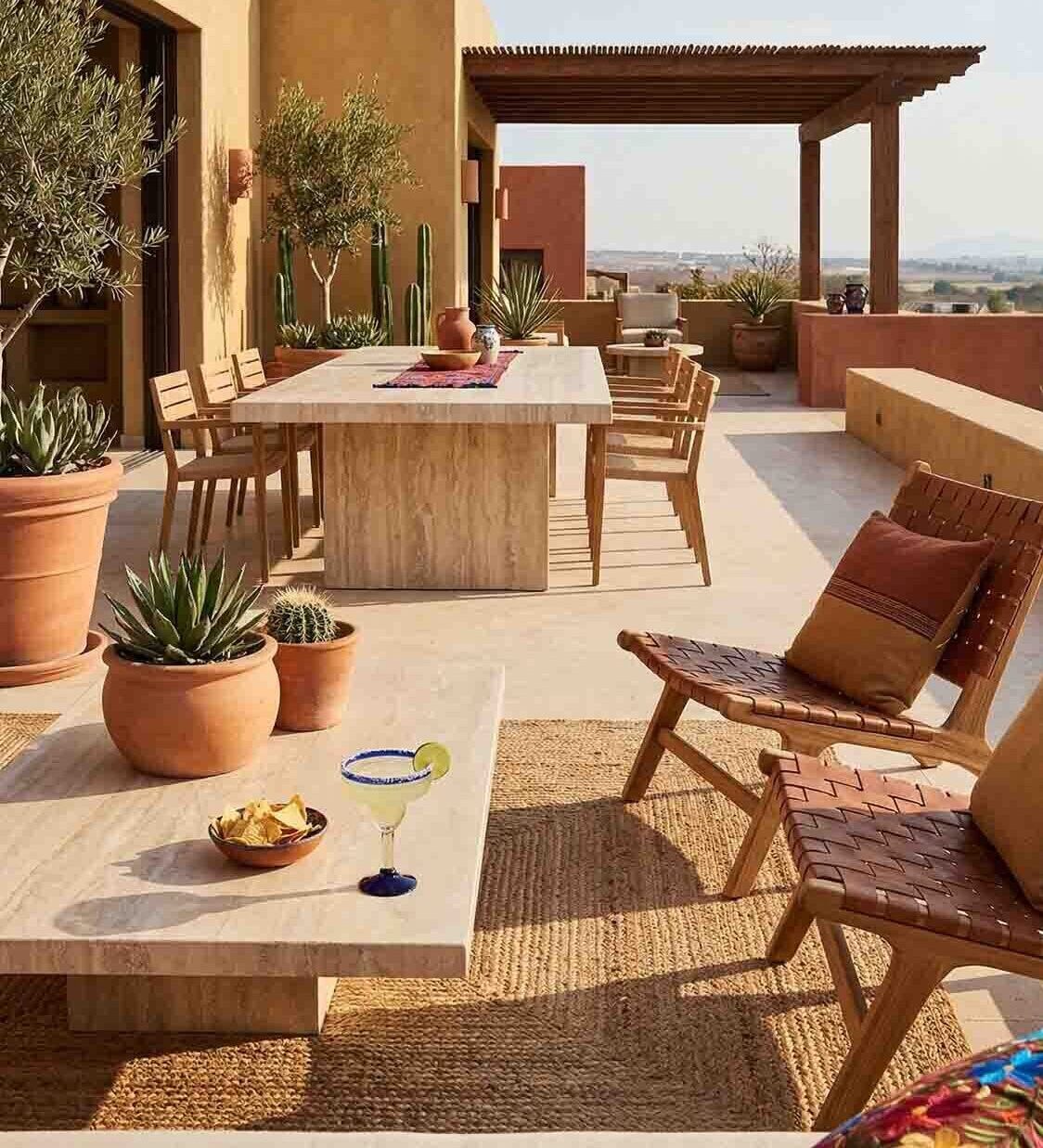

Heat performance would not matter if the material failed in a year, and travertine does not. Properly sealed and installed, it handles Florida's sun, humidity, and heavy foot traffic without fading or breaking down. It has been used outdoors for millennia, from Roman courtyards to modern lanais. That track record tells you what you need to know about its staying power.
The Honest Maintenance Note
Travertine is natural stone, so it asks for a little care. It is porous, which means it should be sealed to resist staining and resealed periodically depending on sun and use. It is also sensitive to acids, so acidic cleaners and spills can etch the surface. Outdoors, none of this is a real burden. It is mostly the reason travertine belongs on pool decks, patios, and walkways rather than on a kitchen counter, where acidic spills are constant. For outdoor floors, a yearly seal and pH-neutral cleaning keep it looking great.
Choosing a Finish
Finish shapes both the look and the safety. Tumbled and brushed finishes have a soft, weathered texture that adds grip, which fits the built-for-outdoor-use brief perfectly. A honed finish looks cleaner and more modern, but it is smoother, so its wet-area traction is worth evaluating before you use it around a pool. When you are comparing travertine tile outdoor options, tone and finish are what determine how cool and how safe it feels. Outdoors, texture usually wins.
Opustone's Cool-Running Travertine
If heat performance is your priority, start with the lighter tones. Opustone carries pale travertines like Vintage White and Silver Travertine Honed that reflect sun well and stay comfortable underfoot. Availability moves with natural stone, so it is worth checking live inventory for what is on the floor. And because color and texture are hard to judge from a screen, these are worth seeing and feeling in person. Browse our travertine to get a sense of the range.
Feel It Underfoot
Surface temperature and grip are things you judge with your feet, not a photo. The best way to choose is to compare tones and finishes in person.
Visit an Opustone showroom in Miami, Fort Lauderdale, or West Palm Beach to feel the difference between a light and a dark travertine, and between a tumbled and a honed finish. Start with a little outdoor inspiration, then book an appointment, and we will help you choose a travertine built for the Florida sun.
Frequently Asked Questions
Far less than most outdoor surfaces. Its light, reflective tones bounce sunlight away, and its porous structure lets heat dissipate instead of building up. That keeps a travertine deck noticeably cooler underfoot than concrete or dark pavers, even at midday.
Yes. Concrete pavers are denser and often darker, so they absorb and store more heat. Light travertine reflects more sunlight and has a textured, breathable surface, which makes it cooler to walk on in direct sun.
The lightest tones. Ivory, cream, and light beige reflect the most sunlight and stay coolest. Darker travertine, such as walnut or smoke, runs warmer, though it is usually still cooler than concrete.
Not with the right finish. Tumbled and brushed travertine has a naturally textured surface that grips well even when wet, which makes it a strong choice for pool decks. A smooth honed finish should be evaluated for wet-area traction first.
Yes. Travertine is porous, so it should be sealed to resist staining and resealed periodically based on sun and use. Clean it with a pH-neutral product and avoid acidic cleaners, which can etch the surface.
It is one of the best. Travertine stays cool underfoot, resists slipping when textured, and holds up to sun, heat, and humidity for years. Those qualities are why it has been a Florida pool-deck staple for so long.