
Drive past a well-designed pool anywhere in South Florida and there is a good chance you are looking at travertine. It has been the region's default for pool decks and patios for decades, and for once the popular choice is also the right one. Travertine stays cool when the sun is punishing, grips underfoot when it is wet, and ages into something better rather than worse. It is also a genuine classic, the same stone the Romans built with two thousand years ago. This guide covers what travertine is, why it performs so well in our climate, how to choose between pavers and tile, and how to pick a finish, color, and pattern that will still look right in twenty years.
A Stone With Roman Roots
Travertine is a form of limestone, created where mineral-rich springs deposit layer after layer of calcium carbonate over thousands of years. That slow build gives the stone its signature look: soft, cloudy banding and a lightly pitted surface with real depth. The Romans quarried it near Tivoli, outside Rome, and built the Colosseum, the Trevi Fountain, and the colonnade of St. Peter's Basilica from it. Those structures are still standing, which tells you most of what you need to know about how travertine holds up.
Why Florida Keeps Choosing Travertine
Our climate is hard on outdoor materials, and travertine answers it on the points that matter most around a pool
- Cool underfoot: Light colors reflect sunlight rather than absorbing it, so a travertine deck stays noticeably cooler than concrete or dark pavers, even at midday.
- Slip resistant: Naturally textured surfaces give grip when wet, which is exactly what you want at the edge of a pool.
- Built for sun and humidity: Travertine shrugs off relentless UV and heat without fading, and it handles humidity and afternoon rain without trouble.
Put simply, it is one of the few materials that gets the Florida basics right without asking you to compromise on looks.
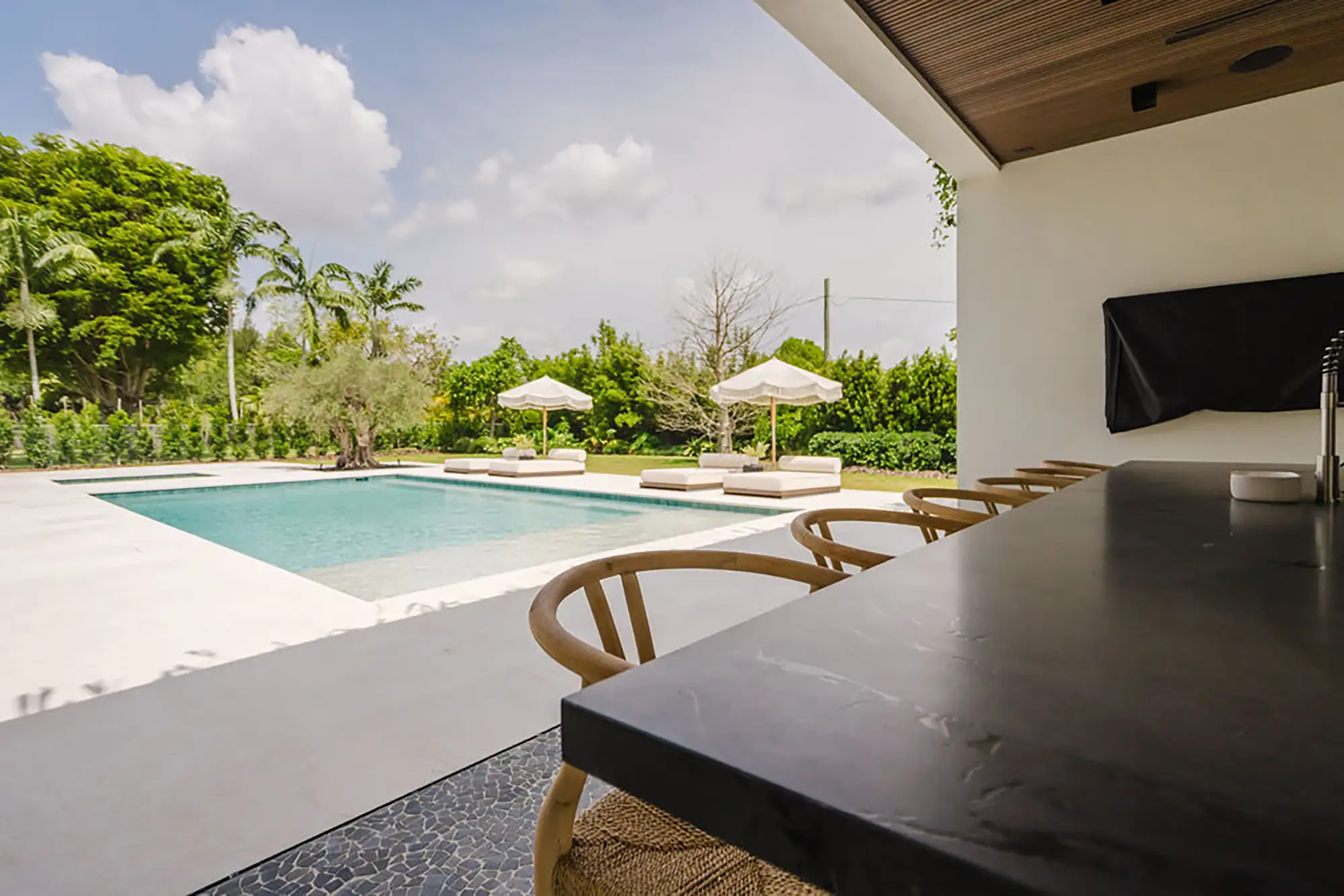 Ivory Light Travertine
Pavers or Tile? Know the Difference
Travertine comes two ways, and the right one depends on where it is going. Travertine pavers are thicker and set like hardscape, which makes them the standard for pool decks, driveways, and patios that take real weight and weather. Travertine tile is thinner, designed to be laid over a prepared surface, and it is the choice for interior floors and walls, along with covered patios. If you are building a pool deck, you want pavers. If you are running travertine tile flooring through the house or across a lanai, you want tile.
Finishes That Fit the Setting
Finish is where performance and style meet. A tumbled or brushed finish softens the edges and surface for a weathered, old-world look, and it adds grip, which makes it the go-to for pool decks and any wet area. A honed and filled finish is smoother and more uniform, with the surface pores filled for a cleaner, more modern feel that suits interior floors and contemporary patios. Same stone, very different personality, so it is worth seeing both in person before you decide.
Color and Pattern
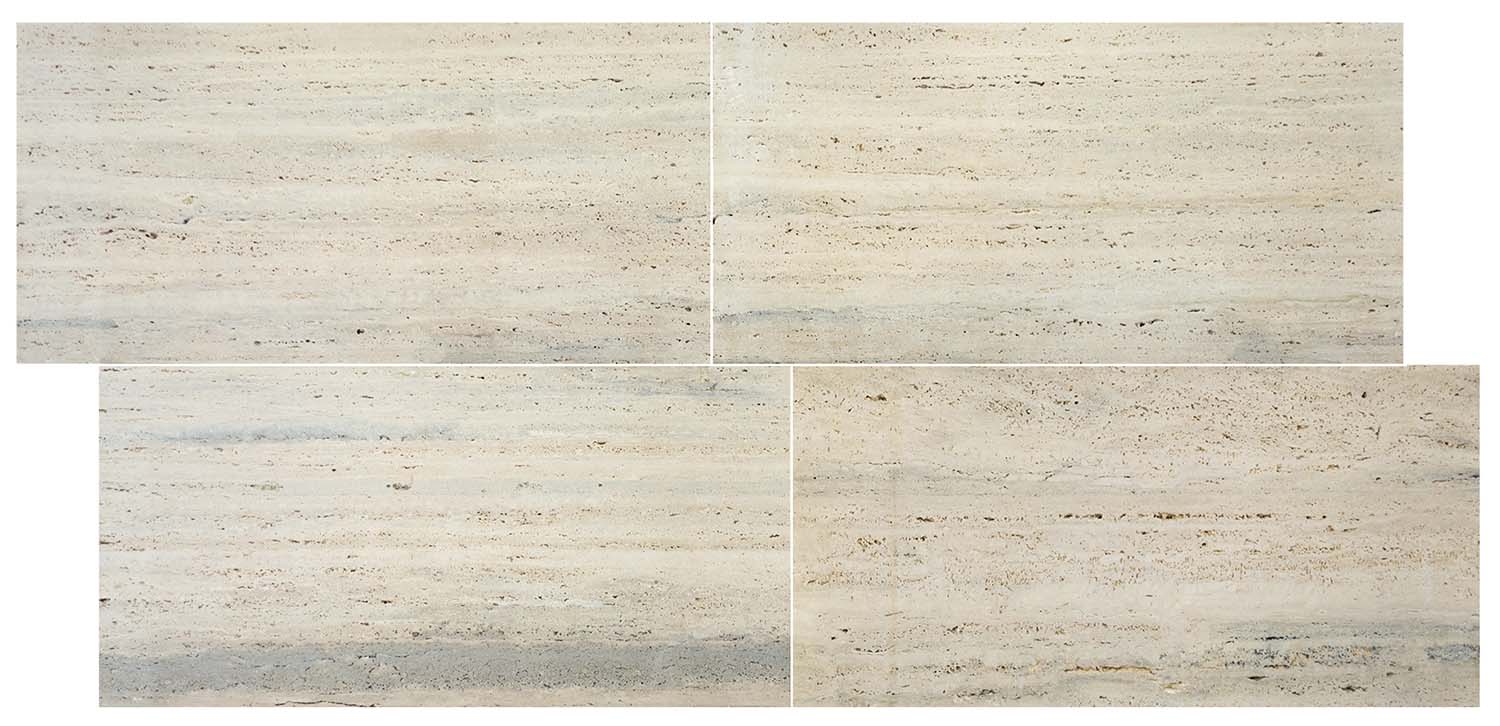 Smoke Silver Travertine Saw Cut
Travertine runs through a warm, earthy palette, from pale ivory and creamy white to golden beige, silver-grey, and deep walnut. On our floors you will find whites and silvers like Vintage White, Smoke Silver, Titanium, and Atlantico, each reading a little differently in sun versus shade, so it is always worth checking live inventory for what is in stock. A white travertine tile keeps a space bright and calm, while a silver or walnut brings depth and drama. Layout matters as much as color. The French pattern, also called the Versailles set, combines four tile sizes into a repeating module that creates natural movement without looking busy. Mixed rectangular layouts do something similar with a cleaner, more linear rhythm. Both suit travertine's organic character far better than a single-size grid.
Travertine Indoors, Too
Keeping Travertine at Its Best
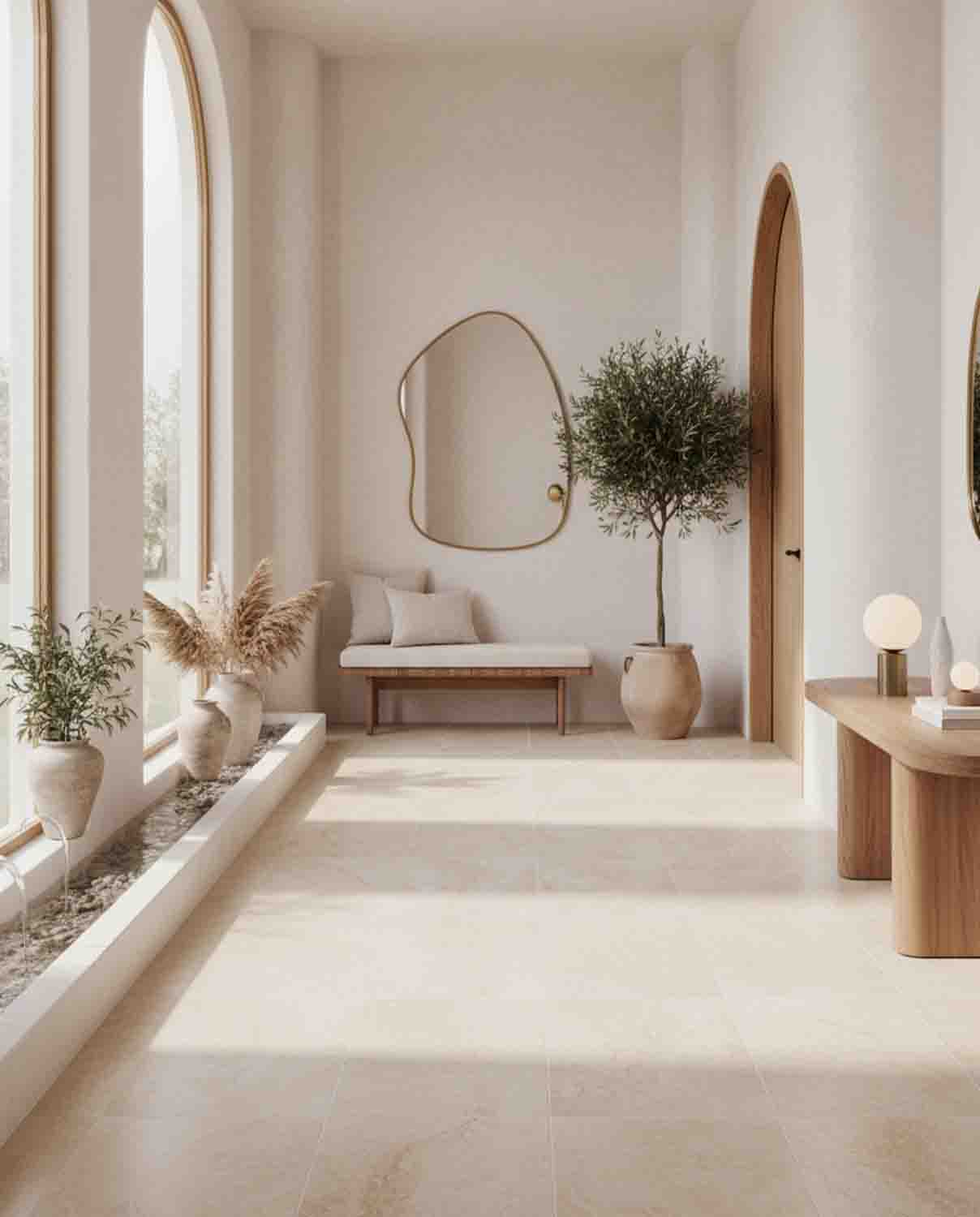
See Travertine Under the Florida Sun
The best travertine decisions happen outside, in the light the stone was made for, where you can watch a color shift from sun to shade and feel the difference between a tumbled and a honed finish. If you are looking for travertine tile near you in South Florida, our showrooms let you compare colors, finishes, and patterns in person and figure out exactly what your project needs.
Start with a little outdoor inspiration, browse our travertine, or book an appointment in Miami, Fort Lauderdale, or West Palm Beach, and we will help you build the kind of outdoor space that makes a Florida home.
Frequently Asked Questions
Yes, it is one of the best choices available. Travertine stays cooler underfoot than concrete or dark pavers, its textured surface resists slipping when wet, and it holds up to sun, heat, and humidity for years. It is the reason travertine has been a Florida pool-deck staple for so long.
Far less than most alternatives. Its light, reflective color keeps a travertine deck noticeably cooler than concrete or dark pavers, so it stays comfortable to walk on barefoot even in the middle of a Florida afternoon.
Not when you choose the right finish. Tumbled and brushed travertine has a naturally textured surface that grips underfoot, which makes it well suited to pool decks and other wet areas.
Yes. Travertine is a porous natural stone, so it should be sealed to resist staining and resealed periodically depending on use. Clean it with a pH-neutral cleaner and avoid acidic products, which can etch the surface.
Pavers are thicker and set like hardscape, which suits pool decks, driveways, and patios. Tile is thinner and installed over a prepared surface, which suits interior floors, walls, and covered patios. The project decides which one you need.
Absolutely. Travertine floor tile is a classic choice for entryways, living areas, and bathrooms, and it is a natural way to carry the same material from an outdoor patio into the house for a seamless look.
It comes down to the mood you want. A white travertine tile keeps a space bright and airy, while silvers and walnuts add depth and contrast. Because color reads differently in sun and shade, it is worth seeing full tiles in person before deciding.