
Walk into a room finished in large format porcelain tile and the first thing you notice is what is missing: the grid. Where standard tile chops a floor into a busy pattern of seams, a few oversized tiles cover the same space with only a whisper of grout. The result reads calmer, cleaner, and bigger.
That is the appeal in a sentence, but there is more to know before you commit. Large format porcelain is one of the best surfaces for floors, walls, and outdoor living, and it also asks a few things of your space and your installer. Here is the honest, useful version.
What Counts as Large Format
There is no single official cutoff, but in the trade, large format generally means any tile with at least one side longer than about 12 inches. In practice it starts around 12 by 24 and climbs quickly. Sizes like 24 by 48 and 48 by 48 are common oversized choices, and at the largest end the tiles become porcelain slabs, sometimes called porcelain slab tiles, running up to roughly 60 by 120 inches. The bigger the format, the fewer the seams, which is the whole point.
The Case for Fewer Grout Lines
Grout lines are the visual noise of a tiled surface. Reduce them and a floor or wall reads as one continuous plane rather than a grid, which is why large format porcelain looks so modern and so quiet.
The effect on a room is real. Fewer interruptions make a space feel larger and more open, and a big tile run can visually stretch a narrow hallway or a compact bathroom. On a feature wall or a fireplace surround, near-seamless porcelain gives you the drama of a solid stone slab at a fraction of the weight and cost.
Less Grout, Less Upkeep
There is a practical payoff too. Grout is the part of a tiled surface that collects dirt, grime, and moisture, and it is the part that takes the most scrubbing. Fewer grout lines simply means less of that. A large format porcelain floor wipes down fast and keeps looking clean with far less effort than a small-tile floor, which is part of why it has become a favorite for busy kitchens and entryways.
One Material, Many Looks
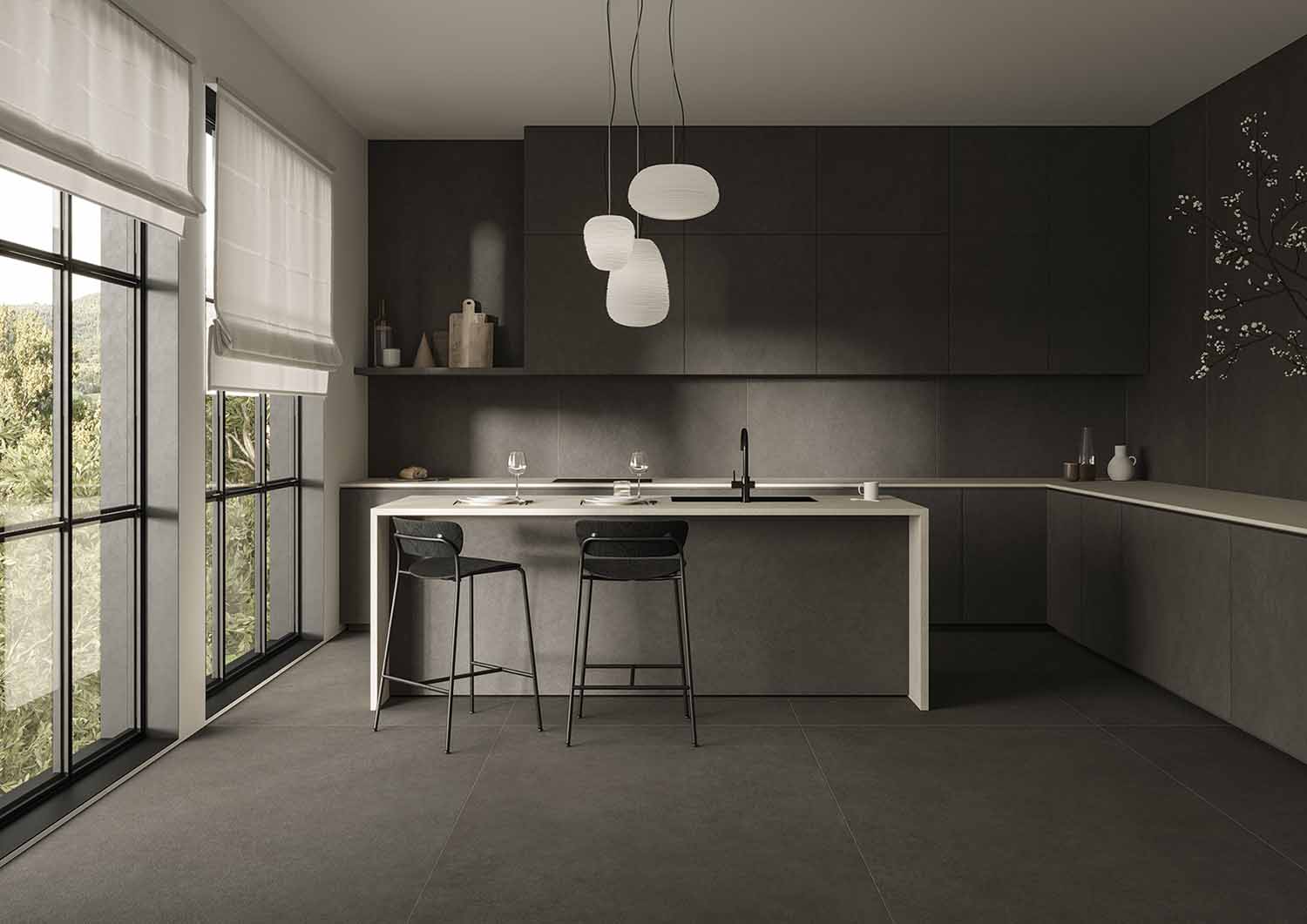
Porcelain is printed, and modern printing is extraordinarily good, so large format tile is not limited to a tile look. It convincingly mimics natural marble and stone, warm wood planks, and raw concrete, often well enough to fool you at arm's length, one reason porcelain that imitates nature has taken off. Because you can specify the same product across surfaces, it is also a designer's shortcut to continuity: run the same tile from the floor up a wall, or from an interior floor out onto a covered patio, and the eye reads one uninterrupted material. That kind of flow is hard to achieve any other way.
What Installation Actually Involves
This is where honesty matters. Large format tile is heavier and less forgiving than standard tile, and installing it well takes skill and the right conditions. The substrate has to be genuinely flat, because any dip or high spot telegraphs through a big rigid tile as lippage, where one edge sits proud of the next. Installers back-butter the tiles, use leveling systems to hold everything even while it cures, and often work in pairs simply because the pieces are large and unwieldy. It is not a weekend project, and a skilled, large-format-experienced installer is worth every penny.
One expectation to reset: large format is not grout-free. Even rectified tiles, the ones with crisp, machine-cut edges, need a grout joint. Guidance from the Tile Council of North America calls for a minimum of about 1/8 inch for rectified tile, a little more once you account for any edge variation. The joints are thin and understated, but they are there by design, and they matter for a durable installation.
One Place to Think Twice
Large format is not automatically the right answer everywhere, and the exception is worth knowing. In areas that stay wet and demand grip, like a pool deck or a shower floor, grout lines actually help, because they add traction underfoot. Minimize the grout with a large, smooth tile and you can reduce slip resistance right where you need it most. It does not rule out large format in those spots, but it does mean choosing the finish carefully, often a textured or structured surface, and talking through location and slip rating with your installer before you decide.
Where Large Format Shines
Where it excels, it really excels. Open-concept living areas benefit most, since a continuous floor makes the whole footprint feel bigger. Entryways and kitchens take advantage of the easy cleaning. Accent walls and fireplace surrounds turn a single dramatic slab into a focal point. And covered outdoor spaces, patios, lanais, and summer kitchens get a surface that shrugs off sun and weather while flowing visually from the rooms inside.
Large Format at Opustone
The easiest way to understand the range is to see the collections. Level delivers a clean concrete look in sizes up to 48 by 48, indoors or out. Ridgeline captures the warmth of oak plank in large format porcelain, with none of the upkeep of real wood. Relativa brings the depth and natural variation of stones like Taj Mahal, Calacatta Gold, and travertine to porcelain tiles up to 48 by 48 and full-size slabs, and Navona brings the look of classic travertine in porcelain slabs up to 60 by 120. Sizes and stock move quickly, so it is worth checking live inventory for what is current.
For a wider look at what porcelain can do, our guide to playing with porcelain is a good place to start.
Best Judged at Full Scale
A small sample chip cannot tell you how a 48-inch tile will read across a whole room, how its veining repeats, or how a concrete look shifts in your light. Large format is a material you really have to see at full scale.
Visit an Opustone showroom in Miami, Fort Lauderdale, or West Palm Beach to stand on the tile, see full pieces on the wall, and compare finishes in person. Book an appointment, and we will help you choose a format and finish that fits the room and the way it will actually be used.
Frequently Asked Questions
Generally, any tile with at least one side longer than about 12 inches. Common oversized sizes include 24 by 48 and 48 by 48, and the very largest pieces, up to roughly 60 by 120 inches, are often called porcelain slabs or porcelain slab tiles.
It is more demanding than standard tile. The pieces are heavy, the substrate must be very flat, and proper installation calls for back-buttering, leveling systems, and an experienced installer. It is not a typical DIY job, and skilled installation is key to avoiding lippage and cracked tiles.
Yes. Even rectified tiles with crisp machine-cut edges need a grout joint, with industry guidance recommending a minimum of about 1/8 inch. Large format reduces the number and width of grout lines, but it is not truly grout-free.
It usually does. Fewer grout lines mean fewer visual interruptions, so the floor or wall reads as one continuous surface, which makes a space feel larger, more open, and more modern.
It can be, with the right finish. Because minimal grout can reduce traction in constantly wet areas, a textured or structured surface is important for showers and pool decks. Discuss the finish and slip rating with your installer before choosing large format for those spots.
Yes, especially in covered outdoor spaces. Porcelain is UV-stable and weather-resistant, and large format lets a patio or lanai flow visually from the interior. For open, constantly wet areas, choose a textured finish for grip.
Yes. Advanced printing lets large format porcelain convincingly mimic marble, natural stone, wood planks, and concrete, giving you those looks with porcelain's durability and low maintenance.