
Few kitchen details make a first impression like a waterfall countertop. Instead of stopping at the edge of an island, the stone folds over the corner and pours straight down to the floor, turning a slab into something closer to sculpture. It is one of the most requested high-end features going, and when it is done right, it is worth every dollar.
The catch is in those two words, done right. A waterfall edge countertop lives or dies on slab selection, bookmatching, and the quality of the mitered cut. Here is an honest look at what it is, what it costs, why it costs that, and whether it is the right move for your kitchen.
What Is a Waterfall Countertop?
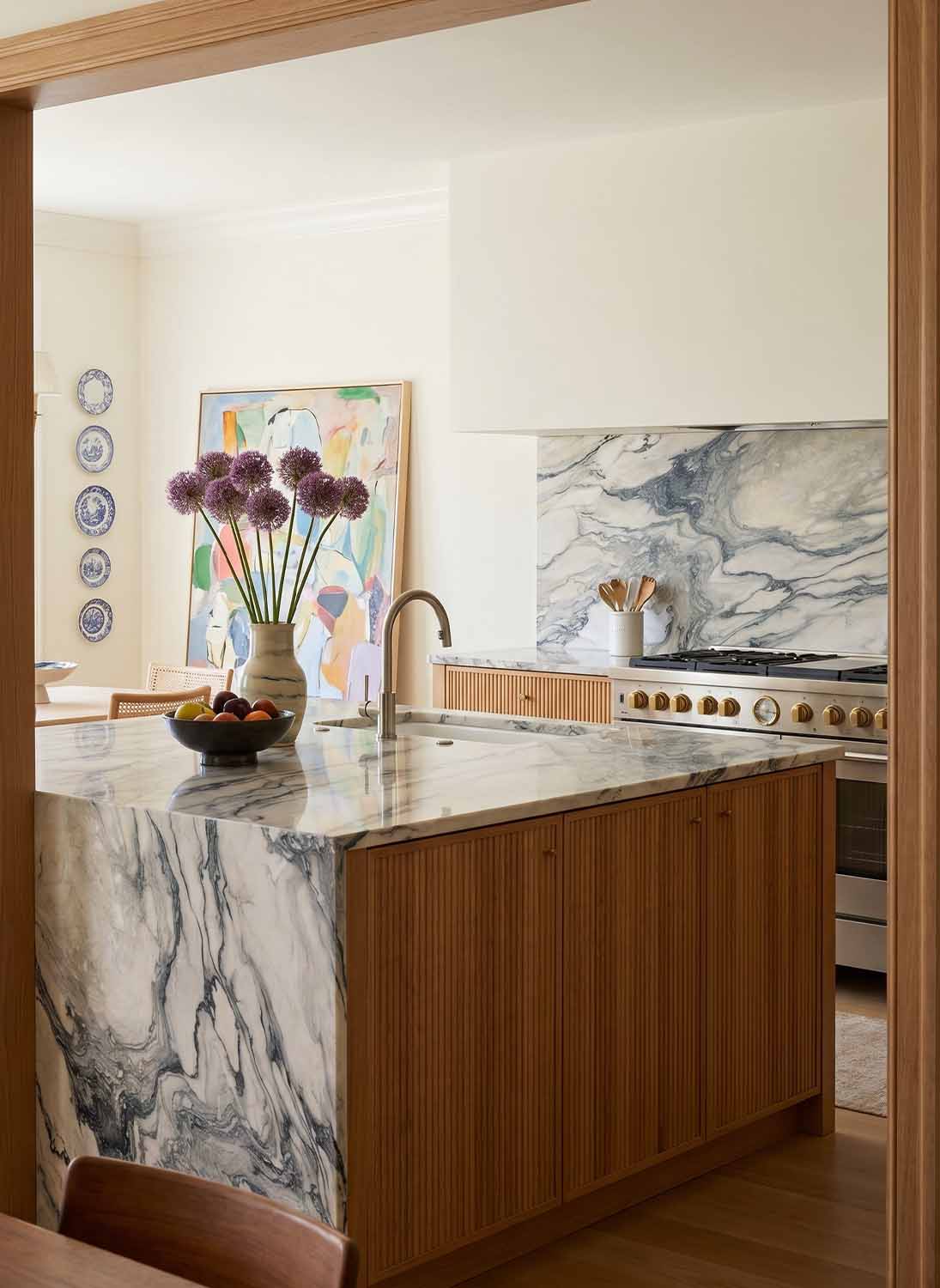
A waterfall countertop is close to what it sounds like. The same slab that forms the horizontal top of an island or peninsula continues down the vertical side, all the way to the floor, so the material appears to cascade over the edge. The two planes meet at a mitered 45-degree joint, where the top and side are each cut at a matching angle and bonded so the seam falls precisely at the corner. Done well, it reads as one continuous, unbroken piece of stone rather than a top sitting on a cabinet.
Why the Look Works
The appeal is mostly about continuity. When veining or pattern runs uninterrupted from the countertop over the edge and down to the floor, the eye reads the whole island as a single sculptural object, a more architectural impression than a standard edge gives.
In an open-plan kitchen, where the island is on display from the living and dining areas, that sculptural quality earns its keep. There is a practical bonus, too. The stone panel shields the island's end from the scuffs, kicks, and wear that painted or wood end panels collect over the years.
Bookmatching: The Detail That Makes or Breaks It
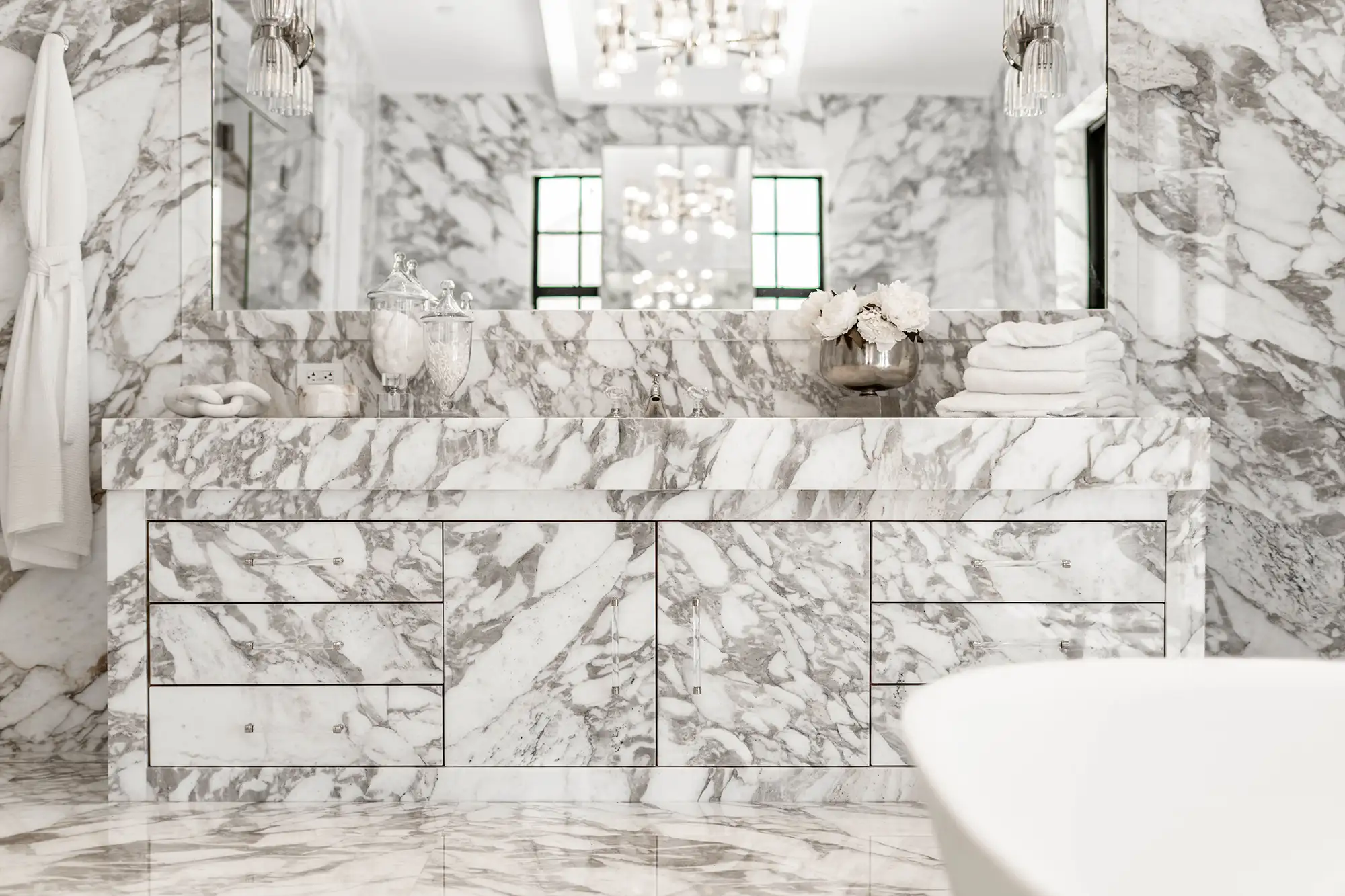
This is where a waterfall countertop island goes from nice to unforgettable, or falls flat. Bookmatching means taking two consecutive slabs cut from the same block and mirroring them at the seam, like opening a book, so the veining flows around the corner and down the waterfall as though it were never interrupted.
When it is done right, you cannot tell where the top ends and the side begins. When it is skipped or done carelessly, the veining stops dead at the corner and picks up somewhere unrelated, and the whole effect collapses into an obviously seamed box. Bookmatching is the single biggest reason to select your slabs in person and work with a fabricator who plans the cut around the pattern.
What It Costs, and Why
A waterfall is a genuine splurge, so it helps to know where the money goes. As a rough guide, a single waterfall side typically adds somewhere around $1,500 to $2,500 or more over a standard countertop, depending on material and market. Three things drive that premium:
- More material: the vertical panels use extra square footage, often from the same block to keep the veining consistent, which can mean buying an additional slab.
- Precision miter cuts: forming the corner takes two exact 45-degree cuts, bonded so the seam is nearly invisible, which is slow, skilled work.
- More fabrication and installation time: the panels are heavy, and aligning the pattern on site leaves no room for error.
Costs climb further with a double waterfall, where both ends of the island pour to the floor, and higher still with bookmatched exotic stone, where slab yield and vein matching add real expense.
Choosing the Material
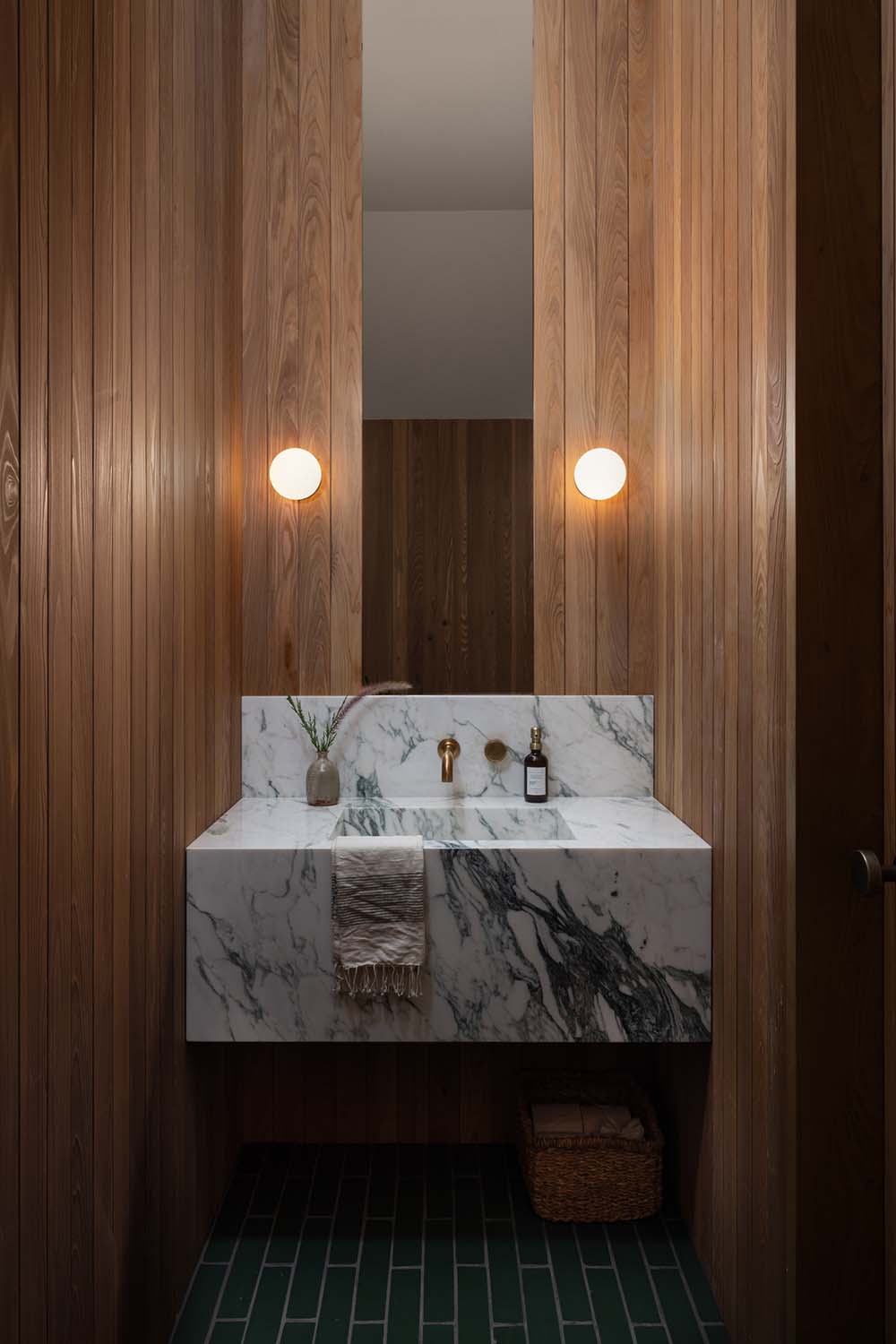
Almost any slab material can be given a waterfall countertop edge, but they are not all equal to fabricate. Quartz and porcelain are engineered and consistent, which makes them more forgiving and more cost-effective to miter and match. Natural stone, marble, quartzite, and granite, delivers the dramatic, one-of-a-kind veining that makes a waterfall breathtaking, but it demands a fabricator genuinely experienced with miter cuts on that specific stone. A miter that works beautifully in quartz can chip or misalign in a brittle exotic marble, so the fabricator's track record matters as much as the slab you choose.
One Practical Caveat
There is one honest thing to know before you commit. The vertical waterfall panel meets the floor, which puts beautiful, expensive stone right where feet, bar stools, vacuum cleaners, and the occasional dropped pan live. That floor-level edge is simply more exposed to chips and impact than the horizontal top. It is not a reason to avoid a waterfall, but in a busy household with kids or heavy traffic, it is worth choosing a tougher material and a clean, simple edge, and being realistic that the base will see more life than the counter.
Is a Waterfall Countertop Right for Your Kitchen?
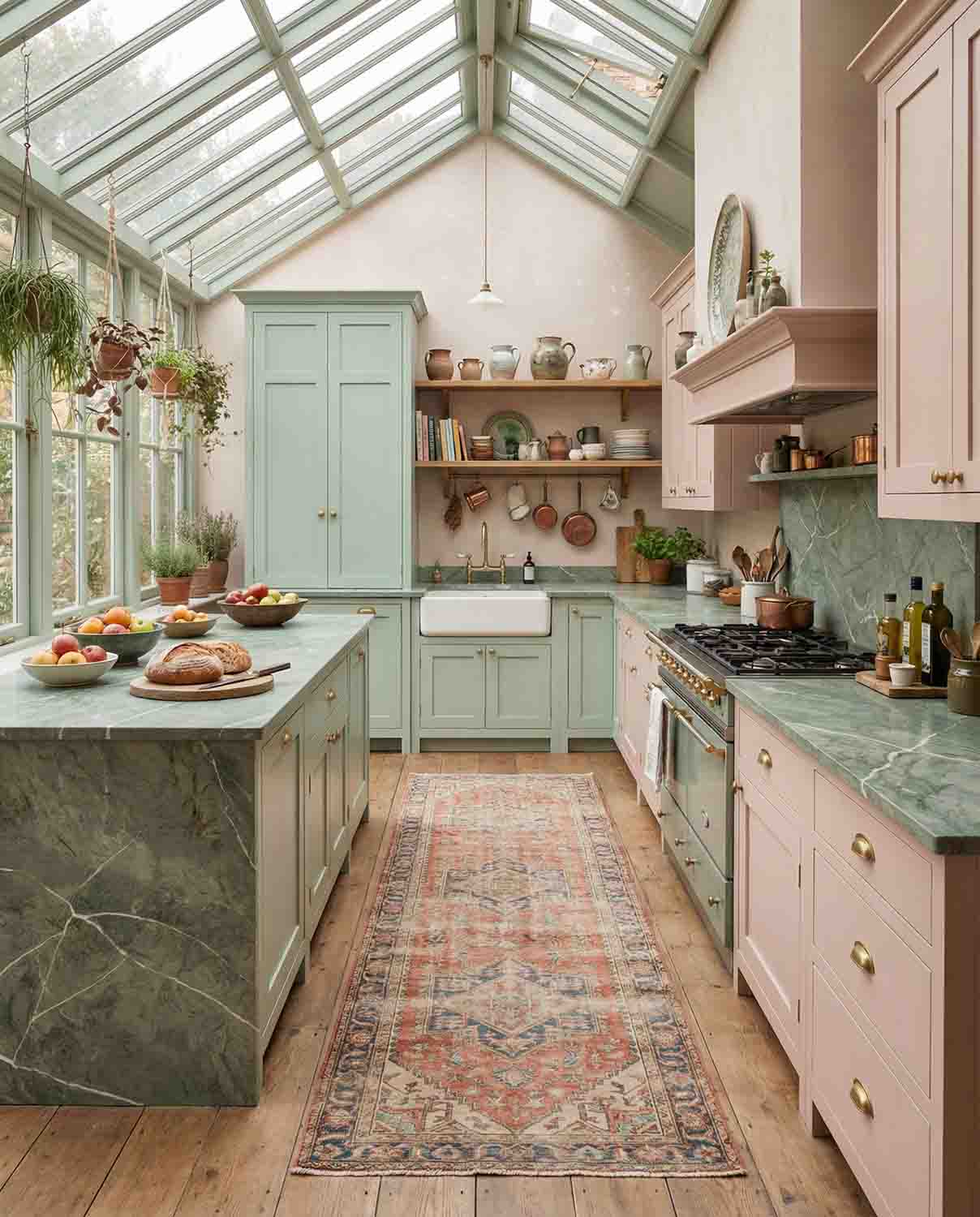
A waterfall rewards the right space and quietly wastes money in the wrong one. It shines in open-concept kitchens where the island is visible from the surrounding living areas, on islands wide and long enough to carry the visual weight of a full stone side, and on projects with the budget to buy the extra material and skilled fabrication without cutting corners.
It makes far less sense on an island pushed against a wall, or one whose seating hides the waterfall side, because you are paying a premium for a feature no one ever sees. If the dramatic side will be on display, a waterfall island countertop is money well spent. If it will not, that budget is better invested elsewhere.
Ways to Get the Look for Less
If the full effect is out of reach, there are smart middle paths. A single waterfall side, on the end that is most visible, delivers most of the drama for a fraction of a double. A partial waterfall, where the stone drops partway down rather than all the way to the floor, gives you the folded-edge look with less material and labor. Neither is really a compromise, just a way to spend where it shows.
Before Anything Gets Cut
A waterfall is one of the few kitchen features where the outcome is decided before a single cut is made, in the slab you choose and the way the veining is planned. That is why it is worth starting in a showroom, not on a spec sheet.
Bring your island dimensions to an Opustone showroom in Miami, Fort Lauderdale, or West Palm Beach, and our team will help you choose the right slabs, plan the bookmatch, and get the miter right the first time. Browse our slabs or see finished projects for inspiration, then book a consultation, and we will help you build a waterfall worth the splurge.
Frequently Asked Questions
It is a countertop where the same slab that forms the top of an island or peninsula continues down the vertical side to the floor, meeting at a mitered 45-degree joint. The effect is one continuous plane of stone that appears to pour over the edge.
A single waterfall side typically adds roughly $1,500 to $2,500 or more over a standard countertop, driven by extra slab material, precision miter cuts, and added fabrication time. A double waterfall or bookmatched exotic stone costs more.
Bookmatching uses two consecutive slabs from the same block, mirrored at the seam like an open book, so the veining flows around the corner and down the waterfall without interruption. It is the difference between a seamless showpiece and a visibly seamed box.
Quartz and porcelain are the most forgiving and cost-effective to fabricate. Natural stone like marble, quartzite, and granite offers more dramatic, one-of-a-kind veining, but it requires a fabricator experienced with miter cuts on that specific stone.
In the right kitchen, yes. A waterfall pays off when the island is visible from open living spaces and wide enough to carry the look, and the budget covers proper material and fabrication. On an island pushed against a wall, where the side is hidden, it usually is not worth the premium.
The vertical panel at floor level is more exposed to kicks, stools, and impact than the horizontal top, so it can chip more readily. In busy households, a tougher material and a simple edge profile help, and it is worth expecting the base to take more wear.
Yes. A single waterfall side on the most visible end delivers most of the drama for far less than a double, and a partial waterfall that drops only partway down is another budget-friendly way to get the look.