
Here is what porcelain countertops are made of, where they shine, where they fall short, and how they compare to quartz, granite, and quartzite, so you can decide with clear eyes.
How Porcelain Is Made, and Why It Matters
Everything worth knowing about porcelain traces back to how it is made. Refined kaolin clay, feldspar, and silica are pressed and then fired at extreme heat until the material vitrifies, fusing into a dense, glass-hard, non-porous slab. The tile industry draws a hard line for what qualifies: porcelain absorbs 0.5 percent water or less, a threshold the Tile Council of North America verifies through independent testing. In plain terms, almost nothing gets into it.
That same process explains the rest. Because the surface is engineered rather than quarried, it can be printed to mimic marble, concrete, travertine, or wood, and it arrives in large-format slabs that stretch well past ten feet for long, nearly seamless runs. It is the source of porcelain's biggest strengths, and, as we will get to, its few real weaknesses.
Benefits of Porcelain
Start with the reason porcelain belongs in a South Florida conversation at all: it does not mind the sun. Where engineered quartz can fade or yellow because its resins break down under UV, porcelain holds its color outdoors indefinitely. Add heat resistance that laughs off a pan straight from the burner, and you have one of the very few surfaces genuinely built for a covered outdoor kitchen or bar.
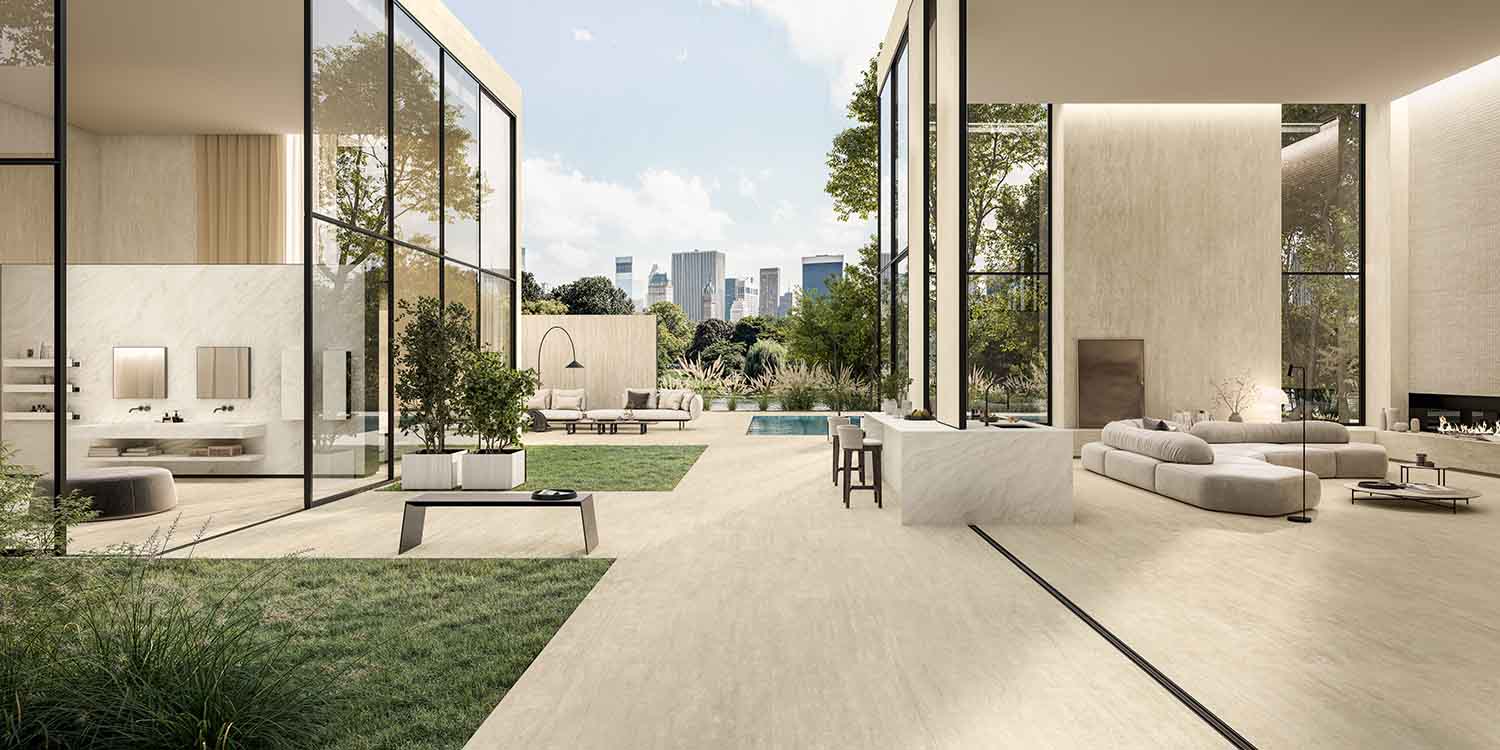 Relativa Porcelain Slabs & Tiles
- Never needs sealing: Porcelain is non-porous, so there is no annual resealing and no window where the surface sits vulnerable. It is about as low-maintenance as a countertop gets.
- Handles real heat: Fired at temperatures far beyond anything your range produces, porcelain takes a hot pan straight off the burner without scorching, dulling, or discoloring.
- Holds its color in the sun: Its UV stability means no fading indoors beside a wall of windows or outdoors on a covered patio, the exact spots where engineered quartz struggles.
- Resists scratches: At around 7 on the Mohs scale, porcelain is hard enough that everyday knives and cookware leave it alone.
- Stays clean and hygienic: Because nothing soaks in, wine, oil, and citrus wipe right off, and the non-porous surface gives bacteria nowhere to settle.
- Offers a design range nothing else can match: Marble veining, raw concrete, warm travertine, even wood, all engineered for a consistency from slab to slab that no quarry can promise.
- Comes in large, light slabs: Large-format sheets make long, nearly seamless runs and full-height backsplashes possible, and porcelain is thinner and lighter than most natural stone.
Getting Porcelain Right
You may also hear that porcelain's pattern sits on the surface rather than running through the slab. On most lines that is true, and it is nothing to lose sleep over. Fabricators use a mitered edge to wrap the pattern around the thickness for a seamless, solid look, and if you want the pattern all the way through, full-body lines deliver exactly that.
The common thread is craftsmanship. Porcelain takes specialized tooling and a practiced hand to cut and finish well, and that is precisely where our in-house expertise comes in. In the right hands, it is as easy to own as any surface in the home.
How It Compares to Quartz, Granite, and Quartzite
| Material | Sealing | Heat resistance | Hardness (Mohs) | Best for |
|---|---|---|---|---|
| Porcelain | Never | Excellent | About 7 | Indoor and outdoor, high-traffic surfaces, marble and concrete looks |
| Quartz (engineered) | Never | Moderate; resin can scorch | About 7 | Indoor kitchens and baths where low upkeep is the priority |
| Granite | Every 1 to 2 years | Excellent | 6 to 6.5 | Busy kitchens and a classic, speckled natural look |
| Quartzite | About yearly | Excellent | About 7 | Indoor and outdoor, marble looks with natural-stone durability |
Where Porcelain Makes the Most Sense
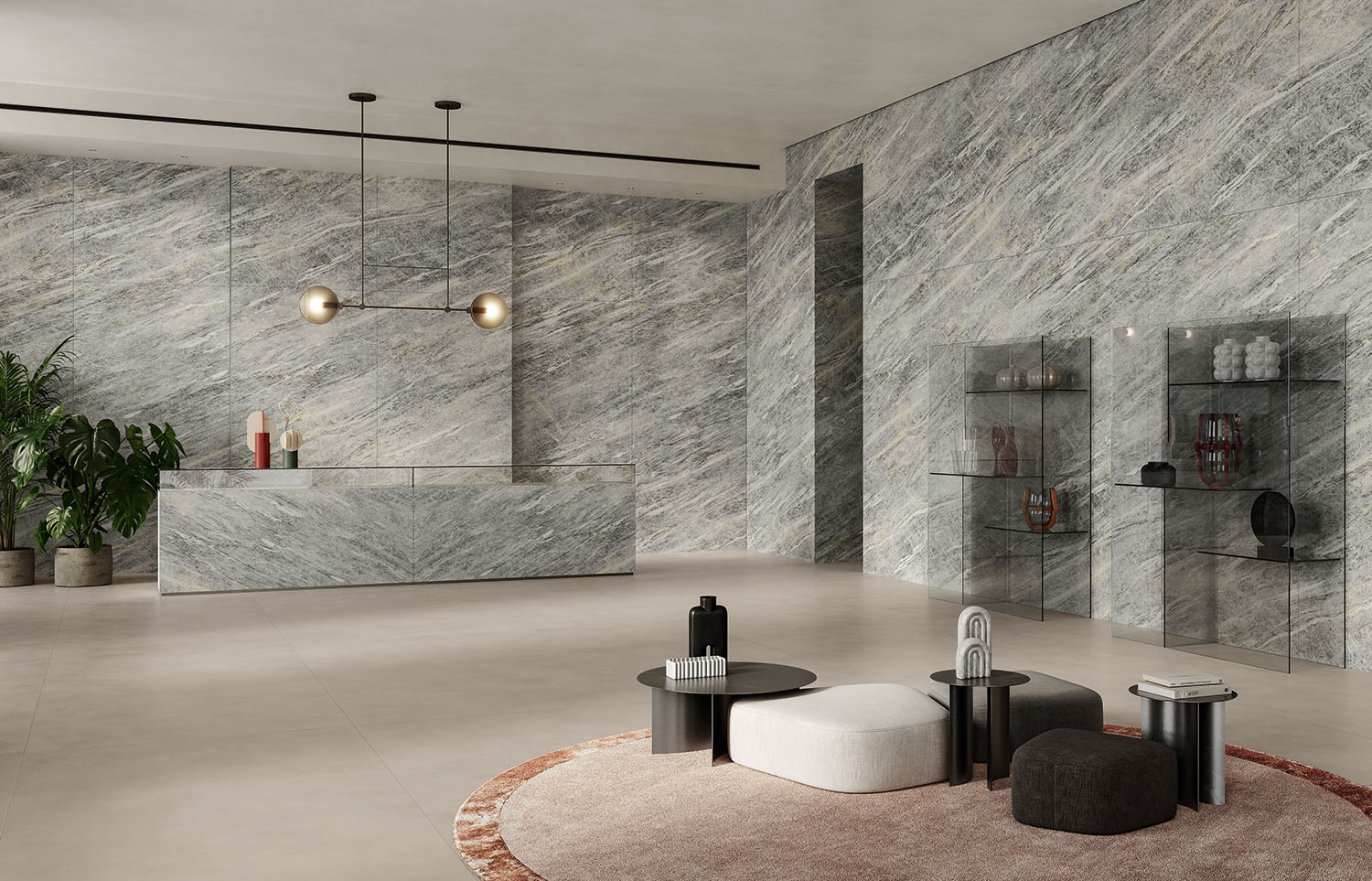 Relativa Cielo Quartzite Honed
The Look: Relativa
The fastest way to understand porcelain's range is to stand in front of it. Our own line, Relativa, makes the case on its own. Thirty-eight options across honed, polished, and textured finishes reinterpret icons like Taj Mahal, Calacatta Gold, and Black Soapstone in porcelain, engineered to shrug off scratches, stains, UV, and extreme heat. From dramatic veining to quiet modern tones, Relativa porcelain shows how far the material has come.
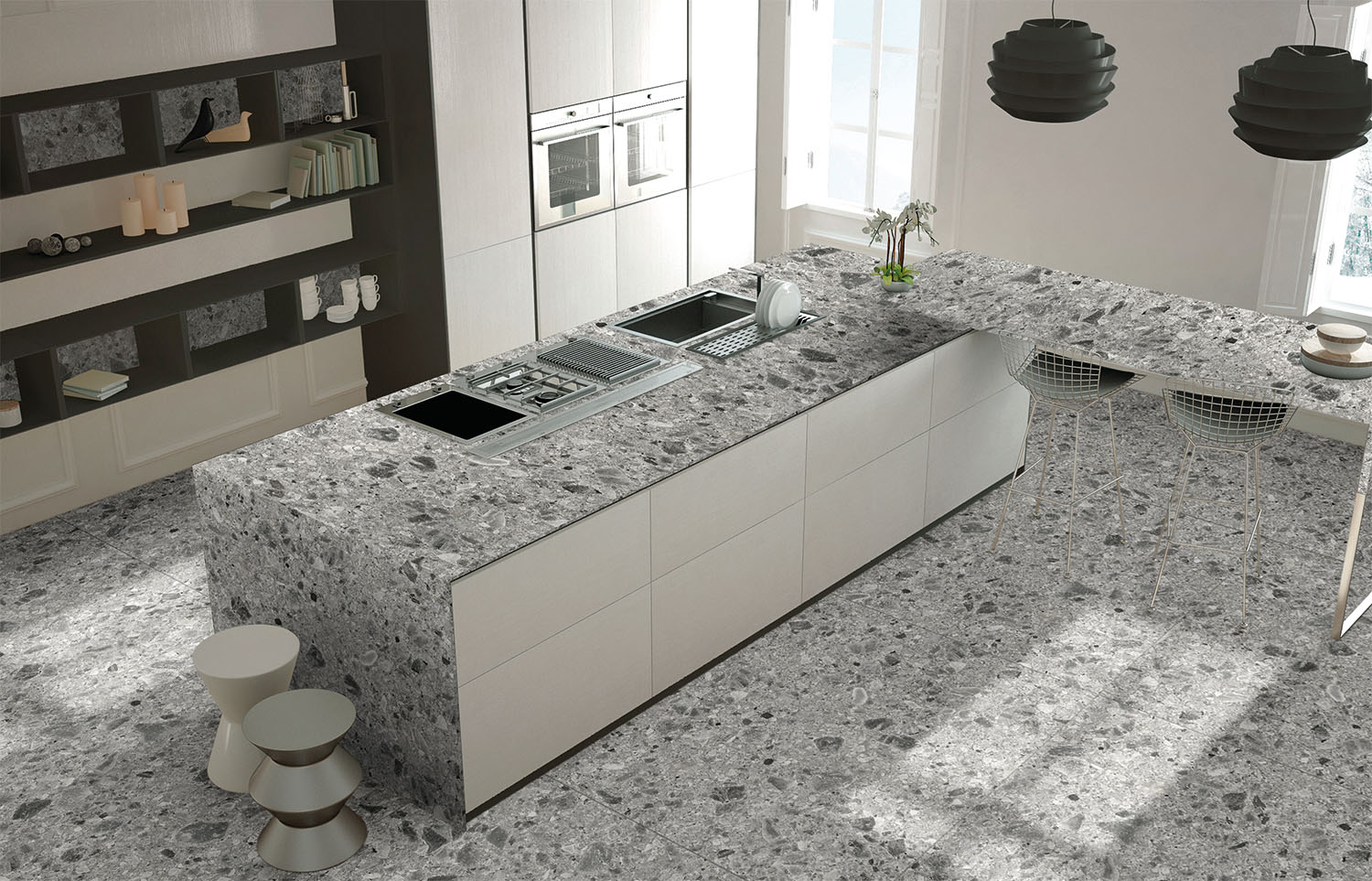 Relativa Ceppo Di Gre Natural
Cost of Porcelain Countertops
For that reason porcelain is quoted by project rather than a flat per-foot rate, and the only way to get a real figure is to see the material and talk through your plan.
See Porcelain Slabs for Yourself at Opustone
Porcelain is a material you want to see, touch, and, ideally, buy from a team that fabricates it correctly. If you are looking for porcelain countertops near you in South Florida, our three showrooms let you compare it against quartz, granite, and quartzite side by side.
Browse our slab selection or book an appointment in Miami, Fort Lauderdale, or West Palm Beach, and we will walk you through the options and the trade-offs honestly.
Frequently Asked Questions
Yes. Porcelain is one of the hardest countertop surfaces available, rating around 7 on the Mohs scale, and it resists scratches, stains, heat, and UV extremely well. Its main vulnerability is chipping at edges under a sharp impact, which is worth weighing for a very high-traffic kitchen.
No. Porcelain is non-porous, so it never needs sealing. That is one of its biggest maintenance advantages over natural stone like granite and quartzite, which need periodic sealing.
Yes, and it is porcelain's most notable limitation. Because it is a fired, brittle material, edges and corners can chip under a hard impact, and the repair is difficult to hide. Choosing a simple edge profile and an experienced fabricator reduces the risk significantly.
Very. Porcelain is UV-stable, heat resistant, and non-porous, so it holds up to sun, weather, and moisture where engineered quartz would fade. In South Florida, that makes it one of the best surfaces for covered outdoor kitchens and bars.
The material is generally competitive with mid to high-range quartz, but the specialized fabrication porcelain requires can add to the installed cost. Most projects land in a similar range to quartz or quartzite once installed, with the final figure depending on the slab, edge profile, and layout. It is quoted by project rather than a flat rate.
It depends on the use. Porcelain wins on heat resistance and UV stability, which makes it the stronger choice outdoors and in sun-filled spaces. Quartz is slightly more forgiving of edge impact and is an excellent low-maintenance indoor surface. Both are non-porous and never need sealing.
On most porcelain, the pattern is printed on the surface rather than running through the body, so fabricators use mitered edges to create a solid look. Full-body porcelains, such as those in the Relativa collection, are the exception and carry the color and pattern through the entire slab.