
Carrara marble is the surface people fall in love with and then talk themselves out of. You have seen it in a hundred beautiful kitchens, and somewhere along the way you also heard that it stains if you look at it wrong, that it cannot survive real cooking, that it belongs in a museum rather than a working kitchen. Most of that reputation is a misunderstanding, and a fixable one.
The truth is more reassuring. Carrara has been living in busy kitchens, bakeries, and public buildings for centuries, and it holds up beautifully with simple, ordinary care. Here is the honest picture, myths and all, so you can decide with confidence instead of secondhand fear.
The Marble Everyone Pictures
When you imagine marble, you are almost certainly picturing Carrara. Quarried in the Carrara region of Italy's Apuan Alps, it is the classic: a white to soft blue-gray background crossed by gentle, feathery gray veining. It is the most recognizable marble in the world, and the one designers reach for when they want timeless, understated elegance rather than bold drama.
Part of the appeal is that quiet consistency. Among white marble countertops, Carrara reads as the calmest of them all, and it pairs with nearly everything, from warm woods to matte black to polished brass.
Where the 'Impractical' Reputation Comes From
The fear is not baseless. Marble is softer and more porous than granite or quartzite, so it can scratch, and it will react to certain spills. Someone sets a glass of wine down, comes back to a dull ring, and the story becomes 'marble stains.'
But here is the detail that reframes the whole conversation: what most people call staining is usually etching, and the two are completely different problems. Once you understand the difference, Carrara stops looking fragile and starts looking very manageable.
Staining vs. Etching: The Distinction That Changes Everything
A stain is absorption. A liquid soaks into the stone and leaves a darker mark, and it is genuinely preventable. Sealing slows absorption dramatically, and wiping spills promptly handles the rest.
Etching is something else. It is a chemical reaction. Acids like lemon juice, vinegar, and wine react with the calcium in the marble and dull the polish, leaving a spot that is usually lighter than the surface around it. Sealing does not prevent etching, because etching is not absorption, it is surface chemistry. That sounds like bad news until you learn two things: etching is shallow and easy to minimize with quick cleanup, and it is far less visible on a honed finish. Most of the 'ruined marble' horror stories are really just etching on a glossy polished top, where every dull spot shows.
Honed vs. Polished: The Choice That Matters Most
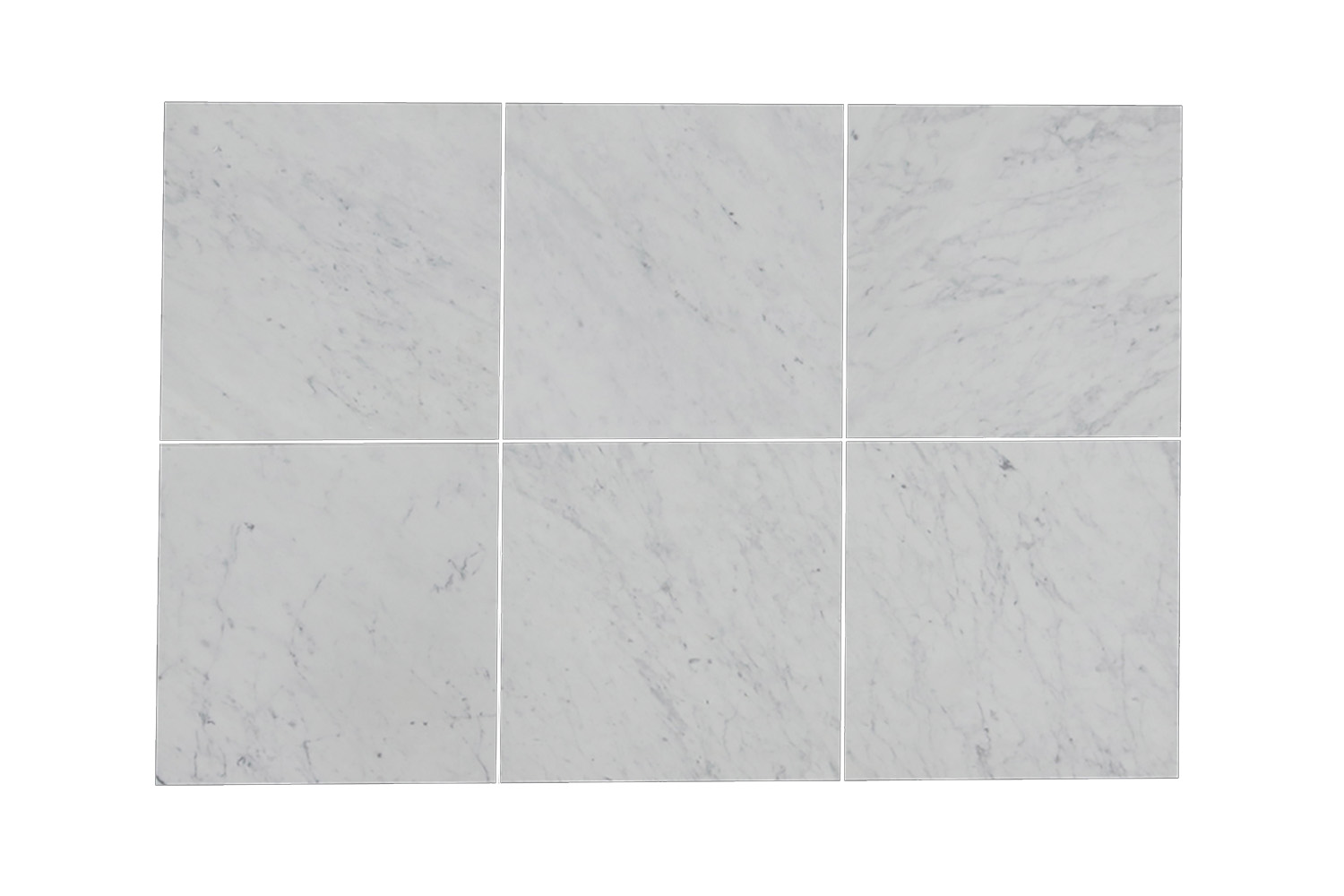 If one decision determines how happy you will be with Carrara in a kitchen, it is this one. A polished finish is glossy and reflective, and it shows off the veining beautifully, but it also reveals every etch mark and scratch. A honed finish is matte and soft, and because the surface is already low-sheen, etching and light scratches essentially disappear into it.
For a hard-working kitchen, honed marble countertops are almost always the smarter pick. Polished has its place in lower-traffic spaces and bathrooms, where it can stay pristine. See both in person before you choose, because a photo never captures the difference.
The Case for Patina
There is also a mindset shift worth making. The owners happiest with marble are the ones who stopped fighting the small marks and started seeing them as character. Marble has been used this way forever. It anchored Roman bakeries, it is the stone Michelangelo chose for the David, and it faces landmark buildings that have weathered centuries of hands and weather.
A Carrara counter that develops a soft, lived-in surface is not damaged; it is doing exactly what marble has always done. If you want a countertop that looks factory-new for thirty years, marble may frustrate you. If you want one that ages like a well-loved farmhouse table, it will quietly win you over.
The Care Routine, Start to Finish
None of this asks much of you. A simple rhythm keeps Carrara looking its best:
- Seal about once a year: apply a penetrating stone sealer, then use a quick water-drop test to check it. If water stops beading and soaks in, it is time to reseal.
- Clean gently: pH-neutral dish soap and a soft cloth are all you need. Skip acidic or abrasive cleaners, which cause the very etching you are trying to avoid.
- Wipe spills promptly: blot wine, citrus, and juice when they land rather than letting them sit.
- Make boards and trivets a habit: cut on a board and rest hot pans on a trivet. With marble it is simply how you cook, not a chore.
That is the whole commitment. An hour a year and a few easy habits.
If You Want the Look With Less Upkeep
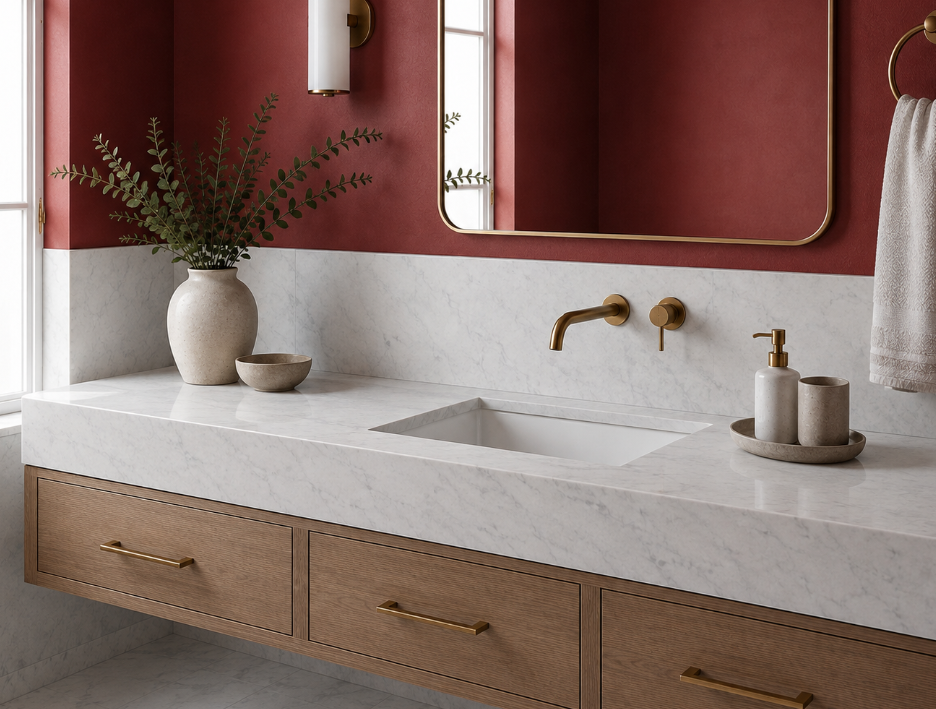
Real marble is not the only way to get the Carrara look, and it is worth being honest about that. Marble-look quartz delivers a similar white-and-gray aesthetic with no sealing and near-total resistance to etching, while quartzite gives you a natural stone that reads much like marble but stands up far better to daily wear. There are also cultured marble countertops, an engineered blend of marble dust and resin that comes in at a lower price point and is common in bathrooms. Any of these can be the right call if the care routine is a dealbreaker. None of them is quite the real thing, though, and for many people that authenticity is the entire point.
What Carrara Costs
Here is a pleasant surprise: Carrara is one of the more affordable natural marbles. Because it is abundant and widely quarried, it usually sits at the friendlier end of the range, often around $60 to $100 per square foot installed based on 2026 cost data, where rarer marbles climb well past $200. Marble countertops cost still tracks the individual slab, the finish, and your layout, so it is quoted by the slab, but Carrara is proof that the classic marble look does not have to be the priciest option in the room.
Carrara, Reconsidered
Carrara is not fragile, it is natural, and those are not the same thing. Understand etching, choose a honed finish for a busy kitchen, keep a light care routine, and make peace with a little character, and you have a surface that has earned its timeless reputation over a very long time.
At Opustone you can see Carrara in several grades, from the soft, even veining of Bianco Carrara to the brighter Carrara C Light and the denser, bolder movement of Carrara Gioia (it is always worth checking live inventory for what is on the floor). The surest way to decide is to compare a honed sample against a polished one in person.
Book an appointment in Miami, Fort Lauderdale, or West Palm Beach, and we will help you find the Carrara that fits both your kitchen and the way you actually live.
Frequently Asked Questions
Not if the marble is sealed and spills are wiped up promptly. True staining, where a liquid absorbs into the stone, is largely preventable. What most people call staining is actually etching, which is a different issue and the one worth understanding before you buy.
A stain is a substance absorbed into the stone, usually darker than the surrounding marble, and sealing helps prevent it. Etching is a chemical reaction where acid dulls the polished surface, usually leaving a lighter mark. Sealing does not prevent etching, but a honed finish makes it far less visible.
Honed is usually the smarter choice for a busy kitchen. Its matte surface hides etch marks and light scratches that would show clearly on a glossy polished top. Polished shows off the veining and shine, and works well in lower-traffic spaces and bathrooms.
No. Sealing reduces absorption, so it helps with staining, but etching is a surface reaction between acid and the calcium in the marble, and no sealer stops it. You minimize etching by wiping acidic spills quickly, using pH-neutral cleaners, and choosing a honed finish.
Yes, with basic care. Carrara is softer than granite or quartzite and will develop some character over time, but it has been used in kitchens, bakeries, and public buildings for centuries. Seal it, clean it gently, use boards and trivets, and it holds up beautifully.
Carrara is one of the more affordable natural marbles, often around $60 to $100 per square foot installed, while rarer marbles cost considerably more. Pricing is quoted by the slab, so seeing the material in person is the best way to get an accurate number.
Carrara is natural stone quarried in Italy. Cultured marble is a manufactured product made from marble dust and resin, molded into vanities and countertops at a lower price point. Cultured marble needs no sealing, but it lacks the depth, veining, and authenticity of the real stone.